

To replace a Dyson air purifier filter, turn the machine off, remove the old filter, and install a new one that matches your model. Reset the filter indicator after the new filter is in place. A proper fit helps the purifier run smoothly and keeps airflow steady. This guide walks through the steps in a clear, simple way.
Find the Right Dyson Filter
Before you replace anything, make sure you’ve got the correct Dyson filter for your specific purifier model, since filter housings and combinations vary. Start with the model label on the base, rear, or underside, then confirm the exact series in the Dyson app, manual, or product page. This step guarantees filter compatibility and prevents installation errors.
Next, verify whether your unit uses a combined HEPA and carbon assembly, separate wraparound layers, or a catalytic component that stays in place. Use model matching, not visual similarity, because covers, clips, and loop assemblies differ across TP, HP, DP, and PH ranges. Check part numbers on the current filter frame if visible. When you confirm the right replacement initially, you stay aligned with the Dyson community’s maintenance standard and avoid unnecessary returns.
Check If Your Dyson Filter Is Due
Initially, check the filter life indicator on the LCD or in the Dyson app to see the remaining percentage or replacement alert.
When your model uses the remote, press the Info button eight times to verify whether the filter is due.
You should also watch for performance warning signs, such as reduced airflow, persistent odors, or a visible filter replacement symbol.
Filter Life Indicator
How do you know it’s time to replace the filter? Start with your purifier’s display. Check the filter life icon on the LCD or in the Dyson app. You’ll see a remaining filter percentage that estimates usable life based on runtime and air conditions. Provided your model uses the remote, press the Info button eight times to open the filter status screen.
When the percentage gets low or the display shows a replacement indicator, you’re due for a new filter.
This built-in check keeps your maintenance consistent and helps you stay aligned with how other Dyson owners care for their machines.
Confirm the reading before you begin disassembly, then power the unit off and unplug it. That way, you’re working from a clear status and a safe starting point every time.
Performance Warning Signs
Although the filter life display gives you the most accurate replacement timing, your Dyson often shows performance warning signs as the filter loads with dust and particles. Watch for weaker airflow, slower odor removal, or dust that lingers longer after cleaning. Should your room feel stuffy sooner, the filter may be saturated.
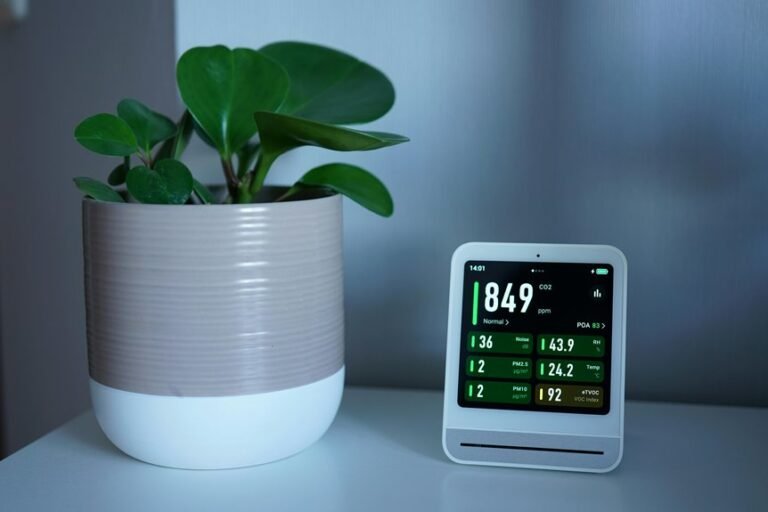
Check your machine’s air quality trends in the app or on the LCD. Should readings stay higher longer than usual, filtration efficiency may be dropping.
Listen for unusual noise, including higher fan strain or rattling during normal operation. You may also notice the purifier running at higher speeds more often to maintain target conditions. Whenever these signs appear together, you’re not alone—most Dyson owners see them before the replacement alert. Use them as your practical cue to inspect filter status.
Get Ready for Filter Replacement
Before you open the purifier, turn it off at the LCD power button and unplug it from the wall socket. Then complete your safety preparation with a simple replacement checklist. Set the purifier on a stable surface with enough room to lift covers and handle filters cleanly.
Next, confirm the filter actually needs changing. Press the Info button on the remote eight times to view remaining filter life, or check the app for an F symbol or replacement percentage. Gather your new filter set, a cotton bud for dust in crevices, and a bag for the used filter.
Finally, review local disposal rules so you’re ready to discard old filters correctly after removal. With these checks done, you’re prepared to move through the replacement process smoothly, confidently, and correctly.
Turn Off and Unplug Your Dyson
Once the purifier is idle, press the on/off button on the LCD screen to shut it down completely, then unplug the power cord from the wall socket. This step establishes power safety before you handle any component. Wait a few seconds so internal systems stop fully, and confirm the display is dark.
Whether your cord is routed behind furniture, free it carefully so you don’t tug the plug at an angle.
Use standard unplugging precautions: grip the plug itself, not the cable, and pull straight out. Keep your hands dry, and make sure the socket area isn’t damp. Should you’ve just run the unit, let it sit briefly before moving it.
Through following this shutdown routine, you protect yourself, protect the purifier, and stay aligned with good maintenance practices everywhere.
Remove the Old Dyson Filter
With the purifier unplugged, release the housing by pulling the side clasp, then lift the head or loop amplifier away from the body should your model require it.
Press the side buttons or open the outer covers, depending on design, and pull the filter assembly straight out. You’re now at the removal stage your maintenance routine depends on.
Unclip the carbon layer at the top and bottom, then unwrap it from the inner core. Next, remove the HEPA filters from the outer covers. Don’t force anything; steady pressure prevents damage. Set the used components aside for old filter disposal according to local regulations.
While the housing is open, follow basic housing cleaning tips: use a cotton bud to clear dust from crevices. Leave the catalytic filter in place, since it doesn’t need replacement.
Install the New Dyson Filter
Align the new filter correctly in the housing, making sure it sits flush and follows the unit’s orientation marks.
Secure the filter cover or outer casing until it clicks into place and the top buttons align properly.
Once you’ve reassembled the purifier, reset the filter indicator so the system shows the new filter life accurately.
Align Filter Properly
Before fitting the replacement, remove the new filter from its packaging and seat it in the housing the same way the old one sat. Match the filter orientation to the guide rails, tabs, or molded edges inside the purifier. In case your model uses separate HEPA and carbon layers, place each section exactly where it belongs and keep the seams even.
Press the filter down gently until you feel proper seating against the inner frame. Don’t force it; should your filter resist, lift it out and realign the edges. Check that the filter sits flush all the way around, with no gaps, twists, or lifted corners.
You’re aiming for a clean, even fit that everyone in the Dyson community relies on for sealed airflow and consistent purifier performance every day.
Secure Filter Cover
Once the new filter sits flush in the housing, reinstall the filter cover and lock the purifier body back together. Guide the cover into its tracks, keeping the top edge aligned with the release buttons or locating tabs for your model. Press evenly until the cover sits flat against the purifier body with no visible gaps around the perimeter.
Next, engage the seal mechanism by applying firm, balanced pressure at the top and bottom. You should hear or feel each clip click into place.
Check latch security by lightly tugging the cover; it shouldn’t shift, lift, or rattle. If you’re working with a loop amplifier model, lower the head onto the base and rotate or press until it locks. A secure fit confirms your purifier is reassembled correctly and ready for the next step.
Reset Filter Indicator
After you’ve reassembled the purifier and plugged it back in, switch it on and reset the filter indicator so the system recognizes the new filter. Press and hold the Night button for five seconds. Watch the LCD for the reset prompt, then release once the display confirms the command. This clears the old filter-life reading and sets monitoring back to the correct baseline.
If your model supports the app reset process, open the Dyson app and select your purifier. Go to filter maintenance, choose reset, and confirm the replacement. Follow the indicator confirmation steps on screen until filter life shows 100 percent. Check that no F symbol or replacement alert remains on the display. Once confirmed, your purifier is ready, sealed, and operating as expected for everyone at home.
Reset the Filter Light
Once you’ve reassembled the purifier and plugged it back in, switch it on and reset the filter indicator so the machine can track the new filter correctly. Press and hold the Night button on the remote for five seconds. Watch the display for the reset confirmation, which usually returns filter life to 100%.
Should your model supports app confirmation methods, open the Dyson app and check that the replacement status updates after the manual reset timing completes. On-screen prompts or a full filter percentage confirm the light has cleared.
Should the indicator stays on, repeat the hold for a full five seconds without releasing beforehand. Make sure the remote points directly at the purifier during the command. Once confirmed, you’re aligned with the same maintenance routine Dyson users follow for consistent filter-life tracking.
Test Your Dyson After Replacement
Now test the purifier to confirm the new filter is seated correctly and the machine responds normally. Power it on, let it run for one minute, and watch the display for stable operation. You’re making sure your Dyson is ready to rejoin your daily routine without interruption.
- Set the fan to a low, then medium speed. Perform airflow verification through feeling for steady output from the loop or vents.
- Listen closely during operation. Complete a brief noise inspection to confirm the motor sounds even, with no rattling, scraping, or vibration.
- Check airflow direction changes, oscillation, and response to remote or onboard controls. Verify the screen updates normally and the purifier shifts smoothly between settings.
If performance looks and sounds consistent, your replacement was successful and your unit is operating as expected.
Fix Filter Fit and Reset Problems
If the new filter doesn’t seat correctly, check that the HEPA and carbon sections align with the housing and that the covers lock fully into place.
You should also confirm the head or loop amplifier clicks down securely, because a poor fit can trigger errors or reduce airflow.
If the filter indicator stays on, reset it by powering the unit on and holding the Night button for 5 seconds until the display confirms the reset.
Resolve Filter Alignment
When the new filter won’t seat correctly or the reset won’t register, start by checking the fit: align the HEPA filters with the outer covers, make sure the carbon filter is clipped at both the top and bottom, and confirm the cover with the buttons is positioned on the correct side. This filter seating step solves most installation faults quickly.
Use this orientation check sequence:
- Verify each HEPA panel sits flush inside its cover, without lifted edges or warped tabs.
- Inspect the carbon sleeve and reclip both ends so it wraps the core evenly.
- Refit the casing and head until you hear a firm click, then inspect for gaps.
If anything binds, remove the assembly and reinstall it squarely. You’ll get a cleaner fit and keep your purifier operating like the rest of us expect.
Reset Filter Indicator
After you’ve confirmed the filter assembly sits flush and the covers are fully locked, restore power and switch the purifier on, then reset the filter indicator by pressing and holding the Night button for 5 seconds until the display confirms the reset.
If the alert remains, check that the head, loop, or casing clicked fully into place and that no cover sits proud. Then reopen the app and follow the app reset instructions to set filter life back to 100 percent. If your model uses the LCD, verify the confirmation screen appears before continuing.
This indicator calibration process guarantees the purifier tracks the new filter accurately. Once completed, you’re back in step with proper maintenance, and your unit’s monitoring system can report remaining life reliably.
Should needed, repeat the reset once.
Help Your Dyson Filter Last Longer
Because Dyson filters typically collect dirt over 6 to 12 months depending on use, you can extend their service life by checking filter status regularly on the display or app and replacing them only once the indicator shows it’s necessary.
For reliable filter maintenance and extending lifespan, follow a disciplined routine with your Dyson community in mind:
- Run the purifier in Auto mode so airflow adjusts to actual particle levels, reducing unnecessary filter loading.
- Keep intake vents, covers, and housing crevices clear; wipe dust from exterior surfaces and clean tight areas gently with a cotton bud.
- Check the LCD or app weekly, and avoid resetting the filter indicator unless you’ve installed a new filter.
You’ll protect airflow efficiency, prevent premature saturation, and keep your purifier performing to Dyson standards every day.
Frequently Asked Questions
Can I Wash and Reuse a Dyson Air Purifier Filter?
No. Dyson air purifier filters are not washable or reusable. Replace the HEPA and carbon filters when the machine alerts you. For upkeep, wipe dust from the filter housing and small crevices, then reset the filter life.
Where Can I Buy Genuine Dyson Replacement Filters?
You can buy genuine Dyson replacement filters from Dyson stores, Dyson’s website, and approved retailers. Check your purifier model before ordering to make sure the filter fits properly and keeps your warranty coverage and expected performance intact.
Are Dyson Air Purifier Filters Covered Under Warranty?
Dyson air purifier filters are generally not covered by the warranty because they are treated as consumable parts. Check the warranty terms for your specific model to verify replacement eligibility. If a filter arrives defective, contact Dyson support as soon as possible.
Do Dyson Filters Help Remove Odors and VOCS?
Yes. Dyson filters can help reduce odors and some VOCs by using activated carbon. Results vary based on the filter’s condition, room airflow, and the amount of VOCs present.
What Is the Difference Between HEPA and Carbon Filters?
HEPA filters capture airborne particles such as dust, pollen, and smoke. Carbon filters remove gases, odors, and volatile organic compounds. Because they use different materials, they work in different ways: HEPA filters physically trap tiny solid particles, while carbon filters adsorb chemical pollutants onto their surface. Used together, they address both particle pollution and airborne chemicals.