

Clean air comes down to a few core features that actually make a difference. A true HEPA filter helps trap dust, pollen, and pet dander, while activated carbon can cut down odors and smoke. CADR, room size, noise, and filter costs shape how well a purifier fits your routine. The best air purifier cleans effectively and feels easy to use every day.
How to Compare Air Purifier Features
As you compare air purifier features, start with what you need the machine to remove, because not every purifier handles the same kind of pollution. Then match that need to the purifier’s strengths. If odors, smoke, or chemical fumes bother your household, look for strong carbon support. Next, check CADR and room size so the unit can keep up with your shared space, not just look nice in it.
From there, compare filter design, replacement cost, and how often you’ll need new parts. A purifier that’s easy to maintain helps you stay consistent, and that matters. Also pay attention to energy efficiency and control simplicity. You want a machine that fits your routine, feels welcoming to everyone at home, and works hard without making daily life feel like one more chore.
Why HEPA Filters Matter Most
Whenever you want real protection, a True HEPA filter matters most because it captures 99.97% of tiny particles as small as 0.3 microns.
That means you can cut down more dust, pollen, pet dander, and other allergens that make your air feel unsafe and uncomfortable.
As you compare features, this is the one you shouldn’t compromise on whenever you want cleaner air you can trust.
True Particle Capture
Because the air in your home can carry dust, pollen, pet dander, mold spores, and even tiny virus-sized particles, HEPA filtration matters more than any other feature whenever your main goal is true particle capture. It gives your space a proven standard you can trust, so you feel confident everyone around you is breathing cleaner air together.
What makes HEPA so essential is particle size physics. A true HEPA filter uses dense fibers to trap particles through interception, impaction, and diffusion, which raises mechanical capture efficiency across a wide range of sizes.
That includes the hard-to-catch 0.3-micron range, where HEPA reaches 99.97% removal. Should you want real performance, choose True HEPA or H13 HEPA, not HEPA-like labels that only sound reassuring, but often miss the mark badly.
Better Allergen Reduction
If allergies make your home feel less like a safe place and more like a daily battle, a HEPA filter matters most because it captures the particles that trigger your symptoms in the first place.
That means you breathe cleaner air where you gather, rest, and reconnect.
True HEPA filtration traps 99.97% of particles at 0.3 microns, including pet dander, dust, and many mold spores.
It also supports stronger pollen control, which matters when outdoor triggers follow you inside on shoes, clothes, and fur.
Because HEPA uses dense fibers and mechanical capture, it doesn’t mask allergens.
It removes them from your shared space.
For even better relief, choose True HEPA, not HEPA-like labels.
When your purifier catches what makes you miserable, your home feels calmer, safer, and more like the welcoming place you deserve every day.
Which Air Purifier Filters Actually Work?
You’ll get the best results from a purifier that uses a True HEPA filter, because it captures tiny particles like dust, pollen, and other airborne irritants with proven efficiency.
Just as significant, activated carbon works where HEPA can’t through absorbing odors, smoke, and chemical gases that would otherwise stay in your air.
Whenever you choose both, you cover the pollutants you can see and the ones you can’t, which helps you breathe easier and feel more confident in your air quality.
HEPA Filter Performance
Whenever you want an air purifier that truly works, start with a True HEPA filter, since it captures 99.97% of particles at 0.3 microns, which is the size many filters struggle to catch. That gives your home the clean-air standard people trust together.
| Feature | Why it matters |
|---|---|
| True HEPA | Captures tiny particles reliably |
| HEPA-like | Marketing term, not proven |
| H13 HEPA | Traps even smaller particles |
| HEPA efficiency testing | Confirms real removal performance |
As air moves through the filter, dense fibers catch dust, pollen, mold, and other airborne particles. Here, filtration fiber density matters because it helps trap particles through real mechanical action, not hype. So whenever you compare models, choose certified True HEPA, skip vague labels, and breathe easier being aware you’re choosing what genuinely protects your shared space.
Activated Carbon Effectiveness
True HEPA handles dust, pollen, and other tiny particles, but it doesn’t do much for smells or gases floating in the air.
That’s where activated carbon helps you feel more at home. Its porous surface grabs smoke, pet odors, cooking smells, and chemical fumes that HEPA leaves behind.
As you compare models, look at carbon weight and filter depth, because those details shape odor removal effectiveness. A thin carbon sheet may freshen air a little, but a thicker bed usually works longer and better.
This also affects VOC absorption capacity, which matters if you deal with paint fumes, cleaners, or wildfire smoke. Whenever you choose a purifier with both True HEPA and substantial activated carbon, you’re building a cleaner, more welcoming space for everyone around you, every single day.
How Much Coverage Do You Need?
How much coverage do you really need? Start with room dimension planning, because your purifier should fit your space like it belongs there. Measure the room, then use square footage matching to compare that number with the purifier’s rated coverage. This helps you choose a unit that can actually keep up.
To make it simple, focus on three checks:
- Measure length and width, then multiply for square footage.
- Compare that number to the package’s recommended room size.
- Check CADR, because a higher rating cleans air faster in larger rooms.
If your space has high ceilings, open layouts, or lots of foot traffic, you’ll usually need more power. Once your purifier matches your room well, your air feels fresher, and your home feels more comfortable for everyone.
When Activated Carbon Is Worth It
If your air still smells stale after you’ve matched the purifier to your room size, activated carbon is often the feature that makes the real difference. HEPA catches particles, but it doesn’t handle gases, fumes, or lingering smells. That’s where carbon helps you feel truly at home again.
To understand odor control basics, consider what’s floating beyond dust. Cooking fumes, pet smells, paint vapors, cleaning chemicals, and wildfire haze can all stay in the air you share every day.
Activated carbon absorbs those gases, so your space feels fresher and more welcoming. You’ll notice the biggest smoke removal benefits whenever tobacco, candles, fireplaces, or outside smoke drift indoors. Whenever a purifier combines HEPA with a solid carbon layer, you get fuller protection and a space that feels easier to breathe in together.
How Quiet Should an Air Purifier Be?
Because a purifier often runs for hours at a time, noise matters almost as much as cleaning power. You want clean air without a constant hum taking over your room. For shared spaces and bedrooms, a lower noise level helps everyone feel comfortable, rested, and at home.
- Aim for about 20 to 40 decibels on low settings, which sounds gentle and easy to live with daily.
- Expect higher sound output on top speeds, since stronger airflow usually creates more noise while cleaning faster.
- Check whether the purifier sounds smooth, not rattly, because tone matters as much as volume once you’re nearby.
That balance matters most in places where you read, work, sleep, or gather. When a purifier feels calming instead of distracting, you’re more likely to keep it running, and that means cleaner air.
Which Smart Features Are Worth It?
Once you’ve found a purifier that won’t disturb your sleep, it makes sense to look at the smart features that make daily use easier.
The best ones help you feel in control, not overloaded. App control lets you adjust speed, check air quality, and set schedules from anywhere, so your space feels ready whenever you walk in.
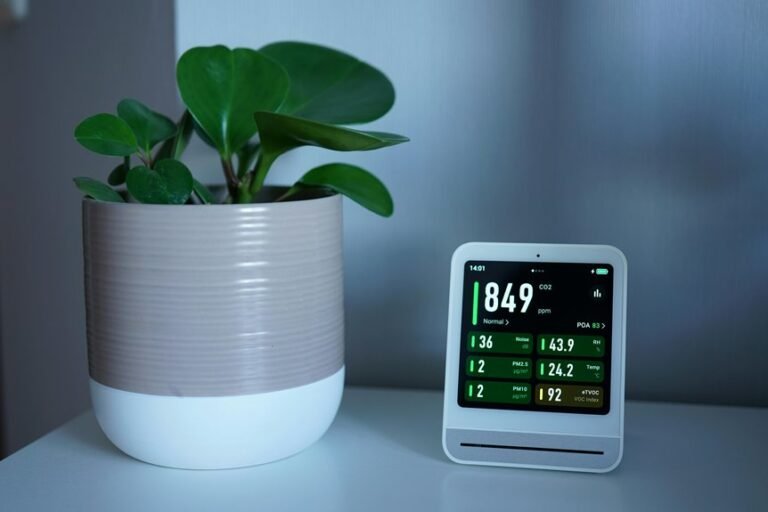
That convenience connects well with automation. Air quality sensors can raise or lower fan speed on their own, which helps your purifier respond whenever cooking smells, dust, or smoke show up.
Voice assistants are useful should your hands be full or you want quick changes without crossing the room. Helpful notifications, child lock settings, and simple displays also make a purifier feel like part of your routine, not one more thing to manage each day.
What Will Filters and Maintenance Cost?
While a purifier’s price gets most of the attention, the real long-term cost often comes from its filters and upkeep. To feel good about your choice, look past the sticker and check filter replacement costs initially. True HEPA and activated carbon filters work well, but they need regular swaps to keep air clean and odors low.
- Check how often each filter needs replacing.
- Compare annual costs, not just one filter price.
- Look for easy access panels and clear change alerts.
That’s where maintenance frequency planning helps. Once you know the schedule, you won’t feel caught off guard or stuck with weak airflow. A washable prefilter can lower costs, while widely available replacement parts make life easier.
You’re not just buying a machine. You’re joining a routine that keeps your home fresh.
Frequently Asked Questions
Do Air Purifiers Help With Wildfire Smoke Indoors?
Yes. If wildfire smoke gets into your apartment, a True HEPA purifier can reduce fine particles in the air. Activated carbon can also help lower smoke odors and some gases, making indoor air more comfortable.
Can an Air Purifier Reduce Dust From Pets?
Yes, an air purifier can help reduce pet dust. Look for a True HEPA filter to capture pet dander and other airborne particles, along with an activated carbon filter to help control odors. This combination can make indoor air feel cleaner and more comfortable for both you and your pets.
Should I Run an Air Purifier All Day?
Yes, running it all day is a good idea. Modern air purifiers are designed to use power efficiently, so continuous use can help keep dust, allergens, and odors at lower levels. It can also make sleeping more comfortable and help maintain fresher indoor air throughout the day.
Where Should an Air Purifier Be Placed?
Position your air purifier in an open area with a few feet of clearance from walls and furniture. Set it close to smoke, pet zones, or other pollution sources, or place it in the room where people spend the most time. Keep the intake and outlet clear so clean air can move freely through the space.
Do Air Purifiers Use a Lot of Electricity?
Air purifiers usually do not use much electricity. Most models are designed for low energy use while still cleaning the air effectively, so you can run one every day without adding much to your power bill.