

Place your air purifier in an open spot where air can move freely around it. Keep it a few feet from walls, furniture, and corners so it can pull in and push out air properly. Put it close to the main source of dust, smoke, or odors in the room for better cleaning. Good placement helps the purifier clean more of the room, work more efficiently, and sound less intrusive.
Start With the Best Spot in the Room
Start with a central location, because that gives the purifier the best chance to pull air from the whole room and return cleaned air evenly.
That central room focus supports stronger circulation patterns, better particle capture, and more consistent cleaning where your household actually gathers.
You’ll get better results whenever you match height to how people use the space. Use breathing zone placement: about 3 to 5 feet high in mixed-use rooms, 2 to 3 feet near seated areas, and 4 to 5 feet where people mostly stand.
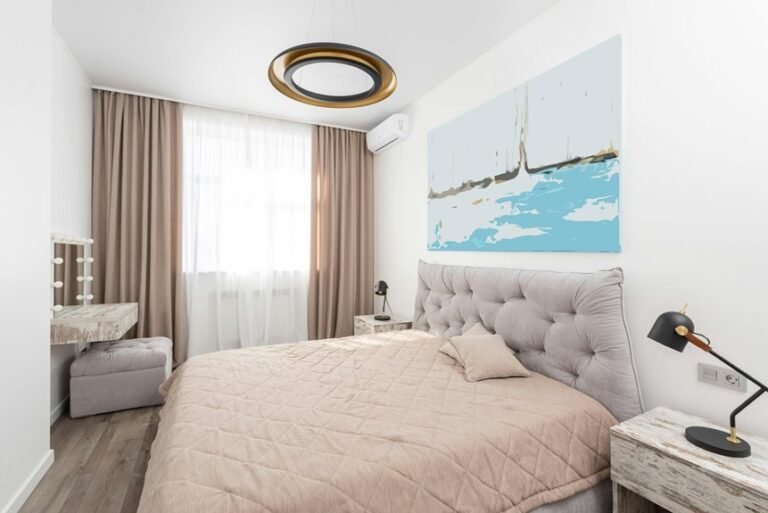
In bedrooms, place the unit 6 to 10 feet from your head and aim the intake toward the sleeping area without blowing directly at your face.
In shared spaces, position it between occupants and likely pollutant sources, such as entry doors or nearby cooking areas.
Keep the Air Purifier Away From Walls
Even in a well-chosen central spot, your purifier still needs open space to work properly. If you place it too close to a wall, you restrict intake and exhaust paths, reducing clean air delivery. Most units perform best with at least 12 inches of wall clearance and consistent airflow spacing on all sides. That gap helps the fan pull contaminated air evenly and prevents recirculating freshly cleaned air.
- You protect your shared air by giving the purifier room to breathe.
- You avoid the frustration of paying for performance you can’t access.
- You help everyone nearby enjoy steadier, quieter filtration.
- You create a setup that feels intentional, safe, and cared for.
Keep it away from corners, shelves, and furniture so your purifier can support the whole room effectively.
Place It Near Dust, Smoke, or Pets
For targeted filtration, place your air purifier close to the main contaminant source, such as a pet bed, litter box, smoking area, or consistently dusty zone. Shorter capture distance improves particle interception before contaminants disperse across the room, which supports lower total exposure for everyone sharing the space.
Use simple dust source tracking to identify where particles repeatedly originate, like entry rugs, fabric furniture, or shedding zones. Apply smoke hotspot mapping by noting where smoke lingers longest after cooking or indoor smoking. Then position the purifier between that source and the people who use the room most.
You’ll reduce recirculation, help the filter load more predictably, and create a cleaner shared environment that feels intentional, welcoming, and easier for your household to maintain daily over time.
Choose the Right Height for Better Airflow
Because air cleaners work best when they intercept particles in the breathing zone, you’ll usually get better results through placing the unit about 3 to 5 feet above the floor instead of leaving it at ground level.
That height aligns the filter with where you sit, sleep, and talk, so an elevated intake captures suspended particles before they settle or drift past you.
- You breathe cleaner air where your family actually gathers, which feels reassuring.
- You improve particle capture in seated rooms through keeping airflow near nose-and-mouth level.
- You support steadier circulation in bedrooms with a nightstand or shelf placement.
- You create a setup that feels intentional, shared, and easy to maintain together.
If you must choose, prioritize the breathing zone over floor convenience. You’ll notice more consistent comfort daily.
Avoid Corners, Curtains, and Blocked Vents
Height helps, but unobstructed airflow determines how much air your purifier can actually clean. When you push the unit into a corner, corner airflow weakens and particles can accumulate instead of reaching the intake. Research on room air mixing shows obstructions reduce effective CADR because the purifier keeps recycling nearby air. You’ll get better performance whenever you leave open space around every side.
Keep the purifier away from curtains, sofas, and shelving that can choke the intake or deflect clean air. Don’t place it near HVAC supply vents or blocked outlets either, because forced air can disrupt capture efficiency and create blocked circulation. Give the unit at least 12 inches of clearance, and check that fabric doesn’t drift over grilles. Small adjustments help your space work better for everyone.
Adjust Air Purifier Placement by Room
Although the same airflow principles apply everywhere, you’ll get better filtration whenever you adjust placement to the room’s layout, occupancy, and main pollutant sources. Use room specific airflow mapping to identify where contaminants enter, linger, and recirculate.
- In bedrooms, place the unit near the breathing zone, but keep outlet flow indirect so you feel protected, not blasted.
- In family rooms, center it near seating and entry paths, creating a cleaner shared space everyone can trust.
- In kitchens, position it near cooking odors, yet safely away from heat, so you can breathe easier during meals.
- Use a seasonal placement strategy: move the purifier toward windows during pollen season and toward indoor sources during closed-window months.
Whenever you tailor placement around room, your purifier works harder for your whole home community.
Move It Closer When You Sleep or Work
Room-level placement matters, but your highest exposure happens where you stay still for long periods, so move the purifier closer whenever you sleep or work. That simple adjustment reduces the concentration of particles in your immediate breathing zone, where dose matters most. For nighttime proximity, place the unit 6 to 10 feet from your bed and aim the intake toward your sleeping area, not directly at your face.
During the day, use similar workday positioning near your desk, sofa, or reading chair. Keep the purifier raised within breathing height when possible, because filtration works best where you actually inhale.
Provided you share a room, this approach helps everyone around you benefit from cleaner local air. You’re not just treating the room; you’re protecting the space where your body spends hours exposed each day.
Avoid Common Air Purifier Placement Mistakes
Even a high-CADR purifier won’t perform well when you place it where airflow gets choked or short-circuited. Keep it out from behind sofas, corners, walls, and curtains; those spots trap particles and can raise local concentrations dramatically. Give every side 12 inches of clearance, lift it 3–5 feet if possible, and keep it away from vents, TVs, fireplaces, and heat sources.
- You breathe easier when the unit sits between you and the pollution source.
- You protect your group’s comfort by avoiding direct airflow at faces during sleep or work.
- You preserve filter lifespan by preventing dust loading from blocked intakes.
- You stay confident with upkeep alerts, so performance doesn’t quietly slip.
These placement habits help your purifier clean shared air consistently, not just sound busy every day.
Frequently Asked Questions
How Often Should I Replace My Air Purifier Filters?
Most air purifier filters need replacement every 3 to 12 months. One neglected filter led to a 40% drop in airflow. Stick to the recommended replacement timing and pay attention to warning signs such as odors, visible dust, discoloration, or louder operation to keep the unit working well.
Can One Air Purifier Clean Multiple Rooms Effectively?
In most homes, one air purifier will not clean several rooms well unless the spaces are compact and open to each other. Performance depends on coverage capacity, purifier placement, and how doors are kept. If air cannot move freely between rooms, circulation weakens, pollutants remain in place, and whole area cleaning becomes inconsistent.
Should I Run My Air Purifier All Day?
Yes. Running it throughout the day keeps particle levels more consistently controlled. Use auto mode or a low fan setting to limit electricity use and noise, then switch to a higher speed while cooking, cleaning, during allergy flare ups, or when smoke is present.
Do Air Purifiers Help Reduce Indoor Humidity or Mold?
No, an air purifier will not lower indoor humidity, but it can capture some airborne mold spores. To help prevent mold, keep indoor humidity between 30% and 50%, fix leaks promptly, and use HEPA filtration as one part of your overall approach.
How Do I Know What Size Air Purifier I Need?
Choose an air purifier by comparing your room’s square footage with its verified clean air delivery rate. A higher CADR usually clears the air more quickly and can provide quieter, more effective coverage for the space.