

Yes, a car air purifier can make the air in your cabin cleaner while you drive. It pulls air through filters that trap dust, pollen, smoke, and lingering smells. That can bring relief on busy roads, during allergy season, or on long daily commutes. With the right setup, your car can feel fresher and more comfortable every time you get in.
What Does a Car Air Purifier Do?
What exactly does a car air purifier do? It helps you create a cleaner, fresher space inside your car, so every ride feels more welcoming.
As air moves through the filter, the purifier captures tiny particles, and that supports a healthier cabin environment. Some models also help with cabin odor reduction, which makes shared rides feel easier and less awkward.
That cleaner airflow connects directly to how you feel on the road. Whenever your cabin feels less stuffy, you can settle in, focus, and enjoy stronger driving comfort improvement. Built-in filters already do a lot, especially whenever you use recirculate mode and keep filters fresh. Portable units can add support, too, though performance depends on fan strength and filter quality. Together, they help your car feel like your space, every trip.
Which Pollutants Can a Car Air Purifier Remove?
Because the air inside your car can trap more than just dust, a car air purifier usually targets several kinds of pollution at once. It can help cut down tiny particles from vehicle exhaust, road soot, smoke, and other fine debris that drift in through doors, vents, and open windows.
That matters when you want your ride to feel fresh and welcoming for everyone inside. Many purifiers also capture common allergens, including pollen dust, pet dander, and mold spores, so you can breathe easier during busy commutes or school runs.
Some models also reduce bacteria and certain airborne irritants that make the cabin feel stale. While results vary according to filter quality, you still get support against the everyday pollutants that can make your shared space feel less comfortable and less clean.
How Does a Car Air Purifier Clean Cabin Air?
How does it actually clear the air inside such a small space? Your purifier pulls cabin air through a fan, then pushes it across filter layers that trap dust, pollen, and other tiny pollutants. That steady airflow matters because faster air exchange means more chances to clean what everyone inside is breathing.
Next, particle capture does the hard work. A quality HEPA filter grabs extremely small particles, even around 0.3 microns, while some systems add carbon or similar media to reduce gases and odors. In many cars, your built in cabin filter already helps, especially as soon as you use recirculate mode and the fan.
Portable units work the same way, just with their own fan and filter set. Once all parts work together, you create a cleaner, more comfortable space that feels better for everyone riding with you.
Who Benefits Most From a Car Air Purifier?
When you deal with allergies, asthma, or daily traffic pollution, a car air purifier can make each drive feel easier on your lungs. You’ll notice the biggest difference when you’re one of the commuters exposed to exhaust, dust, pollen, or wildfire haze. It also helps allergy sufferers who want a calmer, more comfortable cabin.
| You are | What you face | How it helps |
|---|---|---|
| Daily commuter | Heavy traffic fumes | Cleaner-feeling air |
| Parent driving kids | School run dust | More comfort |
| Allergy sufferer | Pollen, pet dander | Fewer triggers |
| Asthma-prone driver | Smoke, fine particles | Easier breathing |
That means you’re not alone when your chest feels tight after a long drive. In a shared world full of road grime, cleaner cabin air helps you feel more at ease, more included, and more in control.
Which Car Air Purifier Features Matter?
What features actually make a car air purifier worth your money? Start with filter quality. You’ll want strong HEPA efficiency, because true HEPA can capture tiny 0.3 micron particles that often trigger allergies and irritation. Next, check CADR ratings. Higher CADR ratings usually mean faster cleaning, which helps you feel the difference sooner during daily drives.
Just as vital, look at fan strength, since weak fans struggle to push air through dense filters. A larger filter also matters, because tiny filters often underperform in real cars.
Whenever odors or traffic fumes bother you, choose a model with gas or VOC filtration, not just particle control. Skip ionizers, since they rarely help much. And finally, pick a purifier with simple filter replacement, so staying on top of clean air feels easy and doable for you.
Where Should You Place a Car Air Purifier?
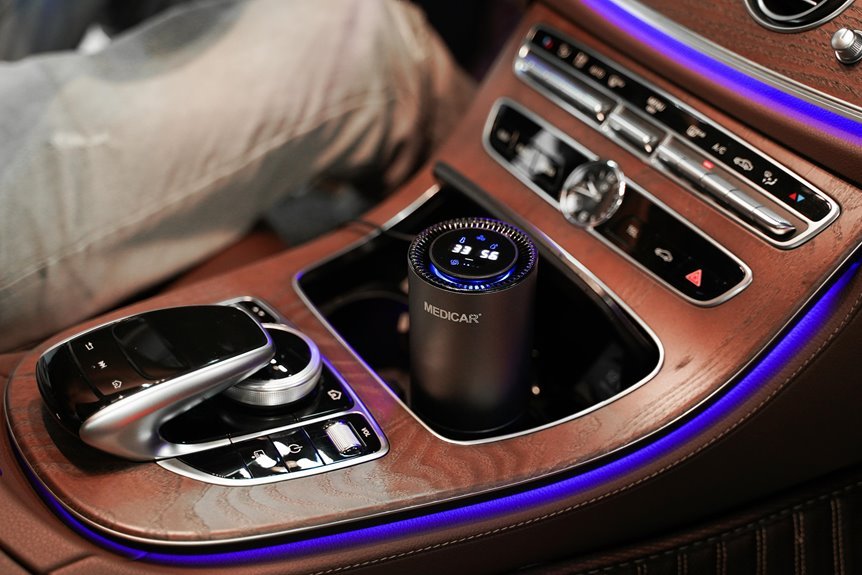
You’ll usually get the best results when you place your car air purifier on the dashboard or in a cup holder where air can move freely around it.
If you want stronger front seat airflow, keep it close to where you and your passenger breathe most often.
Just make sure you don’t block the vents, because your car’s own airflow system still does a lot of the heavy lifting.
Dashboard Or Cup Holder
Placement matters more than most drivers believe, because a car air purifier can only clean the air that actually reaches it. Should you want the best results, start by choosing a spot that feels natural and safe in your daily drive.
For many drivers, dashboard placement seems convenient because it keeps the purifier visible and easy to reach. Still, you should only use that spot should the unit stays stable and doesn’t distract you.
A secure cup holder fit often works better for smaller purifiers because it keeps the device upright, contained, and out of your way. That setup also helps your cabin feel tidy, which makes your car feel more like your space. Should you share rides with family or friends, a neat placement helps everyone feel comfortable, included, and at ease together.
Front Seat Airflow
In the front seat area, airflow decides whether your purifier helps you quickly or just hums along in the background. You want it where cabin air naturally moves between the center dash, front seats, and return path to the car’s intake, so everyone feels included in the clean-air zone.
Place the purifier low and forward, near the center console or behind it, where it can support airflow comfort without fighting the car’s own fan pattern. That setup helps cleaned air reach your face and chest sooner, while still supporting passenger cooling on warm drives.
When you use recirculate mode, your cabin system and purifier can work like teammates, moving the same air through filters again and again. You’ll notice a calmer, fresher feel up front, which makes every ride feel more welcoming for everyone aboard.
Avoiding Vent Obstruction
For the best results, keep your purifier clear of the car’s vents so the cabin system can do its job without strain.
Whenever you block a dash, floor, or rear vent, you choke interior airflow and slow the cleaning you want. Your built in system already filters particles well, especially on recirculate, so it needs strong vent clearance to move air fast.
Place the purifier where it won’t sit in front of supply or return paths. Try the center console, behind the front seats, a seatback pocket, or a secure cupholder mount provided airflow stays open.
That setup helps your whole cabin feel fresher, not just one seat. You’re creating a cleaner shared space for everyone riding with you, and that simple choice helps your car feel more comfortable, calm, and welcoming every day.
How Do You Use a Car Air Purifier Effectively?
How can you get the best results from a car air purifier without turning your drive into a science project? Start simple: run your car’s AC on recirculate, then switch the purifier on as soon as you get in. That team-up helps particles drop faster, so your cabin feels like your space again.
Next, place the purifier where air can move freely around it, and use the highest fan setting when air quality is rough.
During seasonal pollen spikes, keep windows closed and let the system work together. Should your unit has a battery powered runtime, charge it before longer trips so you’re not left guessing.
Stick with HEPA-style filtration, skip ionizers, and use your purifier consistently, especially should allergies, asthma, or city traffic make every ride feel harder than it should.
When Should You Replace the Filter?
Usually, you should replace your car air purifier filter at oil change time, whichever time you notice musty odors, or sooner whenever you drive through heavy smog, wildfire smoke, or pollen-filled roads.
That simple habit keeps your cabin feeling fresh and welcoming for everyone riding with you.
In most cars, regular service visits match smart filter replacement intervals, especially whenever you use recirculate mode often. Whenever airflow gets weak, dust seems to linger, or allergy symptoms creep back, your filter might already be full.
Just as crucial, pay attention to odor based replacement triggers. A stale, damp, or smoky smell usually means the filter can’t trap pollutants well anymore. Whenever you commute in traffic daily, replace it sooner.
Staying ahead of buildup helps you breathe easier and keeps your shared ride comfortable every day.
Frequently Asked Questions
Are Built-In Cabin Filters Better Than Portable Car Air Purifiers?
Built in cabin filters usually work better because they clean the air more quickly and capture more particles. Their performance stays strong when the filter is installed correctly, replaced on schedule, and used with recirculate mode when needed.
Can a Car Air Purifier Remove Cigarette Smoke Completely?
No, a car air purifier cannot remove cigarette smoke completely. After even one cigarette, the smell can linger in the car’s seats, carpets, and vents. A purifier with HEPA filtration, along with fresh air circulation, can reduce smoke particles and make the air feel cleaner for passengers.
Do Ionizer Car Purifiers Actually Improve Air Quality?
Ionizers usually make little difference in a car. For cleaner air, use recirculate mode and a high quality cabin or HEPA filter, which can reduce particles more effectively and make the air inside easier to breathe.
How Often Should a Cabin Air Filter Be Changed?
Replace the cabin air filter at the interval listed in your owner’s manual, and inspect it sooner if you drive in heavy traffic, dusty areas, or places with strong odors. Keeping up with the recommended replacement schedule helps maintain cleaner airflow inside the vehicle.
Which Car Air Purifier Models Are Most Effective?
IQAir Atem, Medify MA CAR, and Westinghouse 1804 stand out for the most effective filtration in cars. They deliver high level HEPA capture, strong odor control, and noticeably cleaner air in shared rides. Philips GoPure and Smart Air QT3 perform less effectively by comparison.