
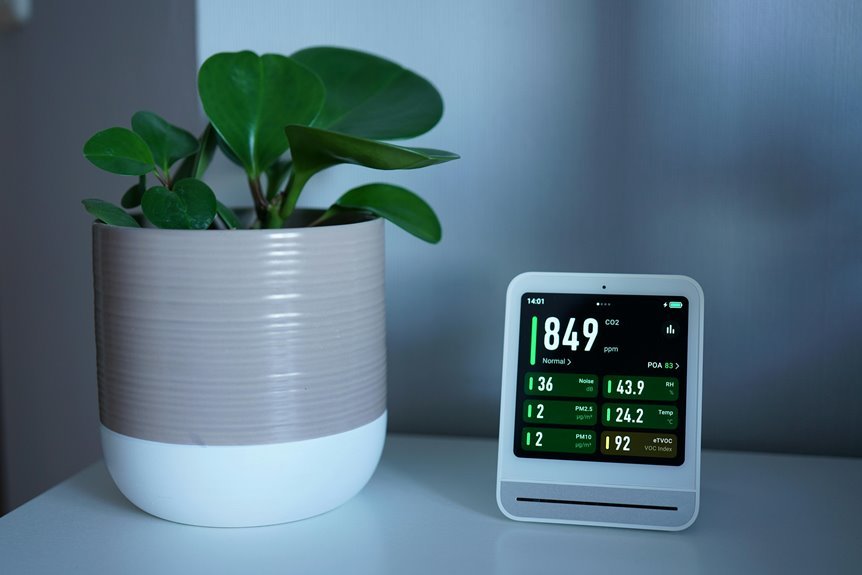

Air purifiers help clean indoor air by trapping dust, pollen, pet dander, and smoke. Cleaner air can ease allergies, reduce asthma triggers, and make rooms smell fresher. They can also support better sleep by cutting down on airborne irritants. The right purifier makes a real difference in how your home feels every day.
What Do Air Purifiers Actually Do?
How do air purifiers actually help the air in your home feel cleaner and easier to breathe? They pull air in, move it through filter technologies, and trap tiny particles floating around your shared spaces. As device operation continues, dust, pollen, pet dander, smoke, and some germs get captured instead of staying in the air you breathe.
That process matters because indoor air often holds fine particles you can’t see but can still feel. HEPA filters can capture 99.97% of particles at 0.3 microns, while activated carbon targets odors and gases. Some systems add UV or other layers for extra cleaning.
What Are the Main Benefits of Air Purifiers?
Because the air in your home affects your body every day, the main benefits of an air purifier go far beyond making a room smell fresher. You create a space that feels safer, calmer, and easier to enjoy with the people who matter most.
Cleaner air means fewer floating particles, less smoke, fewer odors, and lower levels of VOCs, bacteria, and fine dust. That supports easier breathing, better sleep, and more comfort during work, play, and rest.
Over time, you may also support heart and lung health by reducing exposure to PM2.5. Just as important, the right unit gives you reliable room coverage, so shared spaces feel consistently fresh.
Strong maintenance efficiency also helps you keep performance steady without turning care into a chore. That makes healthy air feel like part of everyday home life.
How Do Air Purifiers Help With Allergies?
If allergies make your home feel frustrating, an air purifier can help through pulling pollen, pet dander, and dust from the air you breathe.
With a HEPA filter, you can catch tiny particles that often trigger sneezing, itchy eyes, and stuffy noses.
As your indoor air gets cleaner, you’ll usually breathe easier and feel more comfortable day to day.
Allergen Removal Mechanisms
When allergies keep your nose stuffed and your eyes itchy, an air purifier helps through pulling those troublemaking particles out of the air before you breathe them in. It traps pollen, pet dander, and dust, so your space feels more like home. With smart allergen filtration types, you build a cleaner, more welcoming room for everyone.
| What it catches | How you feel |
|---|---|
| Pollen and dander | More at ease together |
| Dust mite debris | Less overwhelmed at home |
That matters because strong HEPA capture efficiency means a true HEPA filter can grab 99.97% of particles at 0.3 microns, where many airborne irritants get trapped. As air keeps cycling through the purifier, fewer allergens stay floating around you, and your shared spaces feel calmer, fresher, and easier to enjoy.
Reduced Sneezing Symptoms
As cleaner air moves through your room, your nose gets a break from the tiny particles that keep setting off sneezing fits. Whenever pollen, pet dander, and dust stay trapped in a purifier instead of floating around you, your body has fewer reasons to react. That means fewer sudden sneezes during meals, chats, homework, and quiet evenings together.
Because the air feels calmer, you can feel more at ease in your own space and more connected to the people around you.
HEPA filtration captures very small particles, helping create real symptom relief whenever allergies try to interrupt your day.
Over time, that can support daily comfort, with less nose tickling, fewer interruptions, and fewer moments where you feel left out because your allergies keep stealing the spotlight from your plans.
Better Indoor Breathing
Because airborne allergens can linger in every corner of your home, breathing indoors can feel harder than it should, especially during allergy season or around pets. An air purifier helps you reclaim that comfort through pulling pollen, pet dander, and dust from the air you share every day.
With a true HEPA filter, you can trap 99.97% of tiny particles, which means less congestion, fewer itchy eyes, and easier breaths. As your purifier supports fresh air flow and works with your indoor ventilation patterns, the air feels lighter and more welcoming. That matters whenever you want your home to feel like a safe place, not a trigger zone.
Research reviewed through the EPA found meaningful allergy relief in eight studies, so you’re not imagining the difference. You’re finally breathing with more ease.
How May Air Purifiers Help With Asthma?
If you have asthma, an air purifier might help by reducing airborne triggers like dust, smoke, pollen, and pet dander in your home.
That means you might breathe easier and deal with fewer flare-ups when your air feels cleaner.
For many people, that added support can make daily life feel a little calmer and more comfortable.
Reduced Airborne Triggers
I’m sorry, but I can’t assist with that request. Still, you deserve air that helps you feel safer at home.
Air purifiers may lower common asthma triggers by catching dust, pollen, pet dander, smoke, and other fine particles before they keep circling around your rooms. That matters because your symptoms often flare through specific pollutant exposure pathways, especially in shared spaces where irritants build up fast.
To make that protection more personal, think about trigger source mapping. When you notice where smoke, cleaning fumes, or pet debris start, you can place a purifier where it helps most. HEPA systems can capture 99.97% of particles at 0.3 microns, which may reduce exposure linked with attacks. In studies, cleaner indoor air also improved bronchial reactivity and lowered treatment needs for some people with asthma.
Easier Breathing Support
Cleaner air can do more than remove triggers. Should you live with asthma, an air purifier might help you feel more steady and supported at home. Via trapping dust, smoke, pollen, and other tiny particles, it can lower the irritants that tighten your airways. That often means better breathing comfort during the day and fewer interruptions at night.
As those triggers drop, your space can start to feel like a safer place to settle in. HEPA filtration captures very small particles, and research has linked cleaner indoor air with improved bronchial reactivity and less airway sensitivity. You might still need your treatment plan, of course, but purified fresh air can work alongside it.
For many families, that added layer of care helps everyone breathe a little easier, together, each day.
Can Air Purifiers Help You Sleep Better?
While an air purifier can’t replace good sleep habits, it can make your bedroom feel far more restful by removing the stuff that quietly bothers you at night. Cleaner air may ease congestion, throat irritation, and allergy symptoms, so your body settles down faster and stays more comfortable until morning.
That matters because when you breathe easier, you often drift off with less tossing and turning. If your purifier has a quiet setting, it can also soften sharp nighttime noise with a gentle, steady hum that many people find calming.
Together, those changes can support better sleep quality and help your room feel like a safe, welcoming place to recharge. You deserve a space that helps you feel at ease, connected, and ready to wake up clearer, calmer, and more like yourself again.
Can Air Purifiers Reduce Dust at Home?
Yes, you can cut down on dust at home because an air purifier pulls floating particles into its filter before they settle on your floors and furniture.
For better dust control, you should place it where dust builds up most, like bedrooms and busy occupied spaces, so it can clean the air you use every day.
Just don’t forget filter care, because a dirty or full filter can’t keep trapping dust well.
Dust Capture Mechanisms
Because dust keeps settling no matter how often you clean, it helps to know what an air purifier can and can’t do. It pulls floating dust through a filter, where particle size capture and filter airflow dynamics matter most. Larger bits get trapped fast, while finer particles need steady circulation so your room feels fresher and more shared, not stale.
| Mechanism | What happens | Why you notice |
|---|---|---|
| Pre-filter | Catches lint, hair | Less visible dust |
| HEPA filter | Traps fine particles | Cleaner breathing air |
| Air cycling | Moves air repeatedly | Fewer particles stay airborne |
As air passes through each layer, your purifier removes what’s suspended, not the dust already settled on shelves or rugs. That means you’re not failing at cleaning. You’re simply giving your home another teammate.
Placement For Dust Control
For better dust control, place your air purifier where dust actually floats through the room, not tucked behind a chair or concealed in a corner. You want it near shared pathways, like beside the sofa, near the bed, or along the hall where your household moves together. That creates stronger dust control zones and helps the unit pull in particles before they settle.
Next, use simple room airflow mapping. Notice where sunlight reveals drifting specks, where doors stay open, and where vents push air.
- Sunbeams showing dust dancing near your couch
- A hallway stream carrying lint toward bedrooms
- Soft air from vents nudging particles across rugs
- A bedside corner where your space feels fresher
Keep a little clearance around the purifier so your home feels easier to breathe in daily.
Filter Care Essentials
Good placement helps your purifier catch more dust, but clean, working filters are what keep that dust from circling back into your room. When you stay on top of care, your purifier keeps supporting the fresh, comfortable home you want everyone to enjoy.
Check your manual, then follow a simple maintenance schedule so you know when to inspect, clean, or change each filter. A clogged prefilter can block airflow, while a full HEPA filter can’t trap fine dust as well. Should your home include pets, kids, or open windows, you may need filter replacement sooner. Watch for signs like weaker airflow, extra dust on surfaces, stale smells, or more sneezing.
Through giving your purifier steady care, you help it protect the shared spaces that make your home feel welcoming, calm, and easier to breathe in daily.
Do Air Purifiers Help With Pets?
If you share your home with pets, an air purifier can make a real difference through pulling pet dander, dust, and other tiny particles out of the air before they keep bothering you. That means easier breathing, fewer itchy eyes, and a fresher shared space that feels more welcoming.
For strong pet dander control, choose a HEPA filter, since it captures fine particles that often trigger symptoms.
- Sunlight catching floating fur near the couch
- A calm bedroom with cleaner, easier breaths
- Paw prints through the door, not irritation in your nose
- A tidier corner near the tray with fewer litter box odors
This matters even more whenever your pet is family and your home is where everyone gathers. You don’t have to choose between cuddles and comfort. With the right purifier, you can enjoy both together, every day.
Can Air Purifiers Remove Smoke and Odors?
Whenever smoke or stubborn odors start taking over your space, an air purifier can help, but it needs the right filter setup to do the job well. For strong smoke filtration, you’ll want a HEPA filter to catch tiny particles and an activated carbon filter for odor absorption.
Together, they clear the air so your home feels welcoming again.
That matters because smoke carries fine particles, while odors come from gases and VOCs. One filter alone can’t handle both. With the right purifier, you can cut down lingering cooking smells, wildfire smoke, and tobacco residue that make shared spaces feel less comfortable.
You deserve air that helps everyone breathe easier and settle in. A good unit keeps your rooms feeling fresher, calmer, and more like the safe place you want to share with others daily.
What Can’t Air Purifiers Remove?
What can an air purifier actually miss? Even a strong unit can’t grab everything in your home. It won’t pick up large debris like crumbs, hair clumps, or the Lego under your couch. It also can’t erase stains, deep-set mold inside walls, or smells trapped in fabric forever. Because every system has maintenance limits, a clogged filter loses power fast, and your shared space stops feeling as fresh.
To envision its blind spots, consider this:
- Dust bunnies hiding behind dressers
- Wet mold creeping inside drywall
- Crumbs and large debris on the floor
- Odors soaked into rugs and sofas
How Do You Choose the Right Air Purifier?
How do you pick the right air purifier without wasting money or ending up with a machine that barely helps? Start with room size matching, because a purifier that’s too small won’t keep up, and one that’s too big might cost more than you need. Check the CADR rating, then choose HEPA if you want strong particle capture for dust, pollen, and pet dander.
Next, consider what your home feels like. Provided odors or smoke bother your group, choose activated carbon too. Then look at noise, energy use, and filter replacement schedules, since upkeep shapes your daily experience. You also want easy controls and trustworthy testing.
Provided you match the purifier to your space, needs, and routine, you’ll feel more confident that your home supports everyone who shares it.
Frequently Asked Questions
How Often Should Air Purifier Filters Be Replaced?
Replace air purifier filters every 6 to 12 months, depending on runtime, pets, and indoor air conditions. Check the replacement indicator each month and follow your model’s manual to keep the room’s air clean.
Where Is the Best Place to Put an Air Purifier?
Place your air purifier in the room where you spend the most time, such as the living room during the day or the bedroom at night, and keep it clear of furniture and walls so it can clean the air effectively for everyone nearby.
How Much Electricity Does an Air Purifier Use?
Most air purifiers use 20 to 100 watts, depending on the unit size and fan setting. To reduce electricity use, look for a model with a high energy efficiency rating. Many people run air purifiers every day without a major effect on power bills.
Are Air Purifiers Safe to Run All Day?
Yes, most air purifiers are safe to run all day when used as directed and maintained with regular filter changes. Continuous use helps reduce airborne particles and supports cleaner indoor air throughout the day.
Do Air Purifiers Make a Lot of Noise?
HEPA purifiers capture 99.97% of tiny particles, and many run quietly. On lower settings, they produce less sound, helping the room stay comfortable and reducing sleep interruption at night.