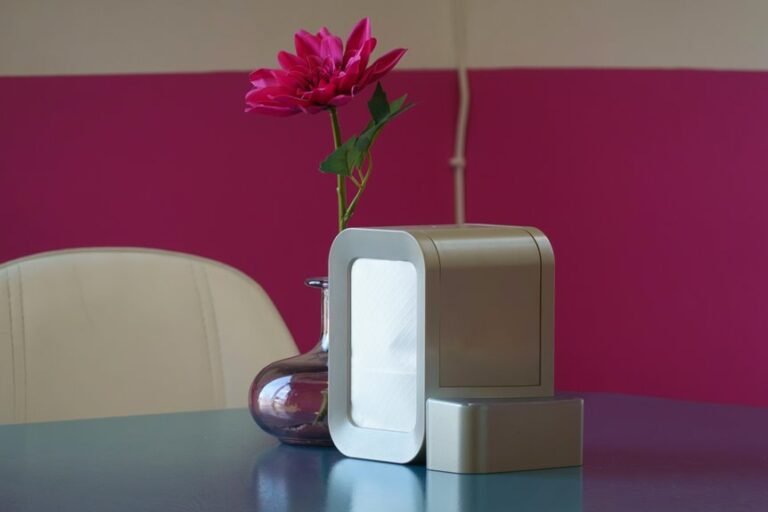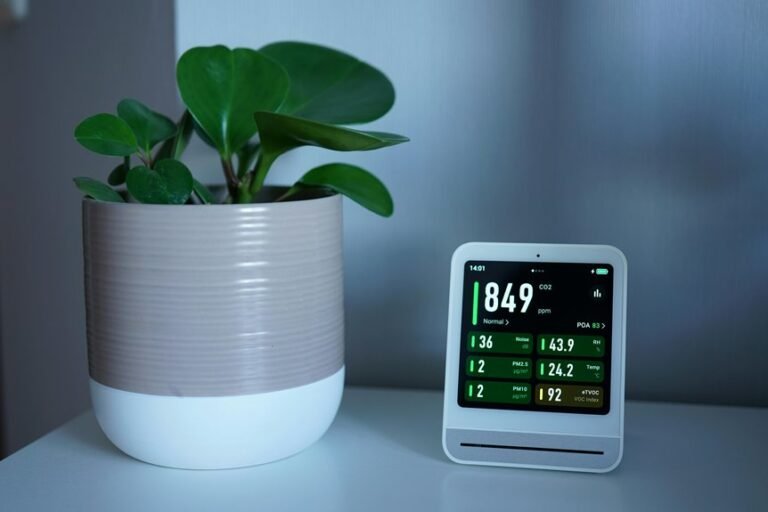

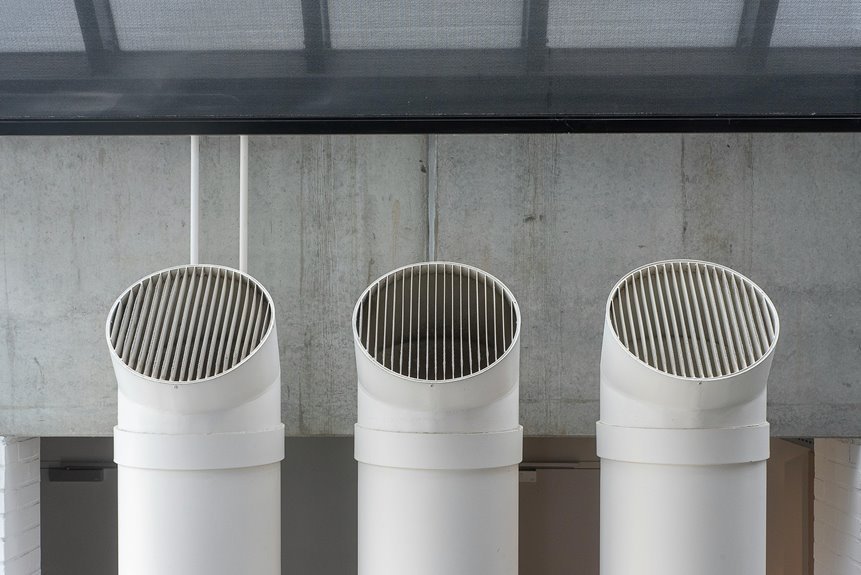

An air purifier helps a room feel fresher by cleaning the air and keeping it moving. Steady airflow stops dust, dander, smoke, and odors from sitting in one spot. That means the room feels less stuffy and more comfortable. Placement and filter choice shape how well all of this works.
What Does Air Purifier Air Circulation Do?
While your air purifier runs, it keeps the air moving so the machine can catch what you don’t want to breathe. That steady motion supports better air quality through helping more of your room’s air reach the filters instead of sitting stale in corners where nobody wants to gather.
As the purifier works through repeated air changes per hour, you get more chances to reduce dust, pet dander, smoke, odors, and wildfire particles. A HEPA filter helps trap tiny particles, while other filters can cut unwanted smells.
This matters because you want your space to feel welcoming, not stuffy or irritating. In many homes, the unit runs day and night, giving you a more dependable path to clean air. Some smart models even raise fan speed once pollution climbs, then quiet down once the air improves.
How an Air Purifier Circulates Air
Your air purifier pulls in dirty air through its intake, so the path that air takes matters more than you could imagine.
Inside, filters like HEPA and activated carbon catch dust, smoke, and odors while the fan keeps the airflow moving steadily.
Then the purifier sends cleaner air back into your room, helping you breathe easier and making the whole space feel fresher.
Air Intake Path
At the heart of an air purifier’s airflow, the intake path is where the cleaning process begins. You rely on the air intake to pull polluted room air inward, so your unit can clean the air before air delivery sends freshness back to your shared space. In designs like Pure Air City, the cover holds the intake, while the top supports smooth exit airflow.
| Feature | What you notice | Why it matters |
|---|---|---|
| Built-in intake | Air enters through the cover | Supports steady suction |
| Inner space | Air moves freely inside | Helps the filtration system |
| 360-degree vents | Air enters from many sides | Improves room circulation |
To support that intake path, place your purifier centrally, keep about 6 inches from walls, and allow 3 to 5 feet of open space nearby.
Filtration And Flow
Once room air enters the intake path, the purifier moves it through a staged filter system that cleans the air step through step before pushing it back into the room.
First, a pre-filter catches dust, lint, and pet hair, so the finer layers can work better and last longer.
Next, the activated carbon filter targets odors and VOCs from cooking, candles, and daily life, helping your space feel more welcoming.
Then HEPA Filtration does the heavy lifting. A True HEPA filter captures 99.97% of tiny particles as small as 0.3 microns, including pollen, smoke, and fine dust.
Just as significant, steady airflow keeps that cleaning process effective at low or high speeds. Whenever your purifier has auto mode, it can sense changes and adjust fan speed, so you always feel supported at home.
Clean Air Output
As the filtered air leaves the purifier, it doesn’t just drift out and disappear. It returns to your room as steady, Clean output, helping everyone breathe easier together. After filtration traps dust, smoke, and other particles, the purifier pushes fresher air back through top vents or a 360-degree design, so circulation feels even and complete.
That output works best whenever you give the unit space. Keep it about 6 inches from walls, and in a bedroom, place it roughly 6 to 7 feet from your headboard. Then the purifier can pull air in, send it out, and keep the room feeling balanced. Higher fan speeds refresh the space faster whenever air feels heavy. Lower fan speeds maintain comfort more quietly through the day and night. Small units suit 200 square feet, while larger ones handle 874.
Air Purifier vs Air Washer vs Diffuser
While these devices can look similar on a shelf, they do very different jobs once you bring them home. Provided that you want cleaner indoor air, an air purifier uses a filter to trap dust, pollen, smoke, and some volatile organic compounds. An air washer uses a water tank, often 1000 ml, to help renew stale air, but it doesn’t match true HEPA capture.
| Device | Main job |
|---|---|
| Air purifier | Removes particles and odors with filters |
| Air washer or diffuser | Uses water for renewal or scent |
That difference matters whenever you want your space to feel welcoming. A diffuser mostly spreads fragrance. It isn’t built for real particle removal. Some water-based models allow 2 to 3 drops of oil, quiet use, and soft lights, yet they’re still not a fragrance-first diffuser for everyday shared comfort.
How Air Circulation Makes a Room Feel Fresher
Whenever your purifier keeps air moving well, it pulls in stale, polluted air and sends cleaner air back into the room, so the space feels fresher faster.
You’ll notice this most whenever odors from cooking, pets, or smoke start to linger, because better circulation helps clear them out instead of letting them hang in the air.
And whenever you give the unit enough open space, you help that clean airflow spread more evenly, which makes the whole room feel cleaner and more comfortable.
Better Air Movement
Because clean air has to move to make a difference, a good air purifier doesn’t just filter the air, it keeps it circulating so your whole room feels fresher instead of leaving clean air trapped in one spot. With powerful air cleaning, you remove airborne particles while steady airflow helps everyone in the room enjoy that cleaner feeling together.
That’s why design and placement matter. A unit with clear intake and outlet paths, like 360-degree vents or top airflow, spreads clean air more evenly across your room size. In strong tests, some models refreshed spaces in 15 to 30 minutes. Auto sensors help too. They raise fan speed whenever pollution climbs, then shift into sleep mode or a quieter setting to keep air moving. Leave about 6 inches from walls, or give it 3 to 5 feet centrally.
Reducing Stale Odors
Even though a room looks clean, trapped air can still hold onto cooking smells, pet odors, bathroom dampness, and that stuffy feeling nobody wants to sit in. Once your purifier pulls that stale air in, it removes particles and odors from the air, then sends cleaner air back across your living room, kitchen, or bath.
| Feature | Freshness benefit |
|---|---|
| Activated carbon filter | Absorbs smells and VOCs fast |
| 360 vents and top outlet | Spreads cleaner air evenly |
That airflow matters because you want every corner to feel welcoming, not just the spot near the machine. Purifiers with smart features, sensors, and auto mode react once odors rise from candles, cooking, or cleaners. In smaller spaces, some units freshen air in 10 to 15 minutes, then keep it comfortable quietly all day.
Can an Air Purifier Remove Odors?
Yes, an air purifier can remove odors, but it needs an activated carbon filter to do it well. That filter adsorbs smells and gases from cooking, pets, smoke, and cleaning products, so your space feels more welcoming to everyone.
For stronger results, choose a unit that pairs carbon with HEPA, which captures particles while carbon handles odor-causing gases. Models like the Rowenta Pure Air City, Levoit Essential 200S, and Dyson Humidify+Cool do this well.
Start with a higher fan speed whenever smells build up, then switch to lower settings or night mode to keep air fresh without extra noise. Also, stay on top of filter replacements, because a saturated carbon filter can’t keep up. If your purifier offers fragrance oil, treat it as a bonus scent, not true odor removal for your home.
How to Choose an Air Purifier by Room Size
Before you choose a purifier, measure your room’s square footage so you can match the unit’s CADR and coverage to the space.
When you use a model that’s too small, it won’t clean the air well, but when you choose the right size, you’ll get better circulation and more consistent results.
For small rooms, compact units can work great, while larger spaces need higher-capacity models that can keep air moving at different fan speeds.
Match CADR To Room
Whenever you match an air purifier’s CADR to your room size, you give it a fair chance to clean the air well without forcing it to run loud all day. That means more comfort for your group and better control of particulate matter in your shared air.
- Check the room’s square feet first.
- For up to 150 square feet, choose a compact unit.
- A Levoit Vital 200S can deliver about five air changes hourly in 360 square feet.
- For extra-large rooms, try Coway Airmega or Airmega ProX.
- Avoid undersized models, because they often need top speed.
This simple match helps you keep strong cleaning at quieter settings. You’ll feel more at home whenever your purifier fits the space, supports easier breathing, and works with you instead of against you every day.
Small Vs Large Spaces
Although many purifiers look similar at initial glance, the right choice depends on how much air your room holds and how hard the unit must work to keep it clean.
When you’re setting up a small room, choose a unit made for smaller spaces, like the Blueair Mini Restful or Vissani VK-6105. The Vissani keeps costs friendly at about $62 yearly while still tackling dust, pollen, and smoke.
As your needs grow, medium rooms often feel right with the Honeywell AirGenius 5 HFD-320, which runs quietly and costs about $87 a year.
For large spaces, step up to stronger models like the Blueair Blue Pure 311i+ Max or 211+.
When you move a purifier from room to room, note that extra-large areas need serious power, such as the Coway Airmega ProX or AirDoctor AD5500.
Measure Square Footage First
Since room size shapes how well a purifier can move and clean the air, your initial step is to measure the space in square feet and match that number to the unit’s coverage rating.
That keeps your group comfortable and helps you get best performance in every room. Also check ceiling height, because cubic feet matter too.
- Measure length times width for square footage.
- Multiply by ceiling height for cubic feet.
- Use 150 sq. ft. units for a small room.
- Choose midrange models for common active spaces.
- Pick high-capacity units for large, open areas.
If your purifier is too small, it can’t clear particles well at low or high speed.
For bedrooms, compact models fit nicely.
For busier spaces, medium units balance noise and cost.
In a larger room, stronger models move air faster and keep everyone breathing easier together.
Where Should You Place an Air Purifier?
Where you place an air purifier can make a bigger difference than most people expect. To help everyone in your home enjoy excellent air, set it in a central spot with 3 to 5 feet of open space around it. That gives purified air room to move. Whenever you’re using the Easy to operate Pure Air City model, keep it at least 6 inches from walls so intake and output stay clear.
In a bedroom, place it about 6 to 7 feet from your headboard. You’ll breathe cleaner air without feeling a draft all night. For the initial cleaning cycle, use a higher fan speed. After that, switch to a lower setting to maintain freshness.
Also, match the purifier to your room size. City Air units like Pure Air City work well in spaces up to 200 square feet.
Why Airflow Design Matters in an Air Purifier
Even though you place your air purifier in a great spot, airflow design still decides how well it cleans the room. You want your space to feel fresh, and that depends on how smoothly the unit pulls in dirty air, moves it through the filtration process, and sends clean air back out. Good design protects air quality and helps prevent spots where quality dips.
- Intake paths pull polluted air in fast
- Top outlets push clean air farther
- Inner suction space enhances steady circulation
- 360 filtration spreads cleaner air more evenly
- Quiet airflow keeps comfort consistent
These details work together. When your purifier is easy to move, you can keep proper clearance from walls, often about 6 inches, so airflow stays strong.
That means your purifier can clean more evenly, run quietly on low, and help everyone in your room breathe easier together.
Can You Run an Air Purifier All Day?
Should you’ve thought about whether an air purifier can stay on all day, the short answer is yes, it can. Most units are built for every day use, so you can keep cleaner air moving through your space day and night. That steady circulation helps during allergy season, smoky days, heavy cooking, or anytime your windows stay shut.
Just as airflow design supports better circulation, continuous use keeps that clean-air rhythm going for your whole household.
Many models run quietly at low speeds, so they blend into daily life. You’ll also want good filter care, including a pre-filter that captures larger particles before they reach the main filter. Check replacement timing or washable parts regularly.
Finally, compare energy efficiency and energy costs, since yearly operation can range from modest to surprisingly high, depending on your model.
How to Use Fragrance Oils Safely
Running your air purifier all day can keep the air feeling fresh, and that same steady use makes scent safety matter more.
To keep your Air clean and welcoming, treat fragrance oil like a light accent, not the main event. You belong in a home that smells good and works well, so follow these safe habits:
- Add only 2 to 3 drops provided your unit allows oils.
- Use compatible oils, such as ap airpleasure essential oils, provided supported.
- Never place oil in air intake, outlet, or other wrong parts.
- Check smart technology or an indicator light for proper operation.
- Choose BPA-free PET and PP materials to extend the life.
Also, avoid dishwashers and sterilizers.
With a 1000 ml tank and daily care, you’ll help prevent residue and protect performance.
How to Clean a Water-Based Air Purifier
For safe, steady performance, start with unplugging your water-based air purifier, emptying the 1000 ml tank, and rinsing the bottle every day so stale water and buildup don’t linger. Then wash the BPA-free PET tank and PP cover with mild soap, water, and a soft sponge. Since it isn’t dishwasher-safe, hand cleaning protects your group of Best Air Purifiers.
| Part | Clean with | Notes |
|---|---|---|
| Tank | Mild soap | Rinse every day |
| Top cover | Soft cloth | No sterilizer |
| Air intake | Damp cloth | Wipe inside |
| Air outlet | Damp cloth | Keeps airflow strong |
If you’ve used 2 to 3 drops of oil after heavy wildfire smoke days, clean afterward to stop residue. Finally, dry all parts fully before refilling and restarting at any of the three speeds.
Common Air Purifier Placement Mistakes
Even a strong air purifier can struggle if you place it in the wrong spot, and that mistake is more common than most people believe. To help your home feel fresh and welcoming, avoid these common setup errors that keep dust particles and dust mites moving around the house.
- Shoving it into a corner or against a wall. Leave about 6 inches clear, with 3 to 5 feet around it.
- Setting it too close to your bed or sofa. About 6 to 7 feet away often makes it easy to breathe comfortably.
- Using a small unit in a large room. Match coverage to square footage.
- Blocking vents with furniture or decor. Air needs room to enter and exit.
- Hiding it from smoke or odor sources. Open placement helps sensors react faster.
Frequently Asked Questions
Do Air Purifiers Help Reduce Airborne Viruses and Bacteria?
Yes, air purifiers can reduce airborne viruses and bacteria. HEPA models can improve particle capture and lower the concentration of bacteria and viruses in the air when the unit is properly sized for the room and operated continuously.
How Often Should Air Purifier Filters Be Replaced?
Replace air purifier filters every 6 to 12 months, depending on the model and how often it runs. Do not assume a filter still works well just because it is still in place. Check the clog indicator, follow the recommended replacement timing, and use maintenance reminders to help maintain cleaner indoor air.
Are Air Purifiers Safe for Pets and Children?
Yes, air purifiers can be used safely around pets and children when you choose models with pet friendly and child safe features, non toxic materials, ozone free filtration, secure placement, and low noise levels to help keep your home comfortable.
Do Air Purifiers Increase Electricity Bills Significantly?
No, an air purifier usually adds only a small amount to your electricity bill. Energy use, monthly cost, power consumption, and efficiency ratings are typically modest, especially with ENERGY STAR certified models and lower fan settings.
Can an Air Purifier Help With Allergies and Asthma Symptoms?
An air purifier can reduce exposure to indoor allergens and common asthma triggers by filtering particles from the air. Relief varies by person, but HEPA and activated carbon filters may help improve air quality when used consistently.