

Installing an in-duct air purifier starts with checking that your HVAC system can support it. You’ll also need enough space in the ductwork, the right airflow direction, and a safe power source. After that, shut off power at the breaker, cut the proper opening, and mount the unit securely. Seal the joints well to prevent air leaks and keep your system running smoothly.
Confirm HVAC and Purifier Compatibility
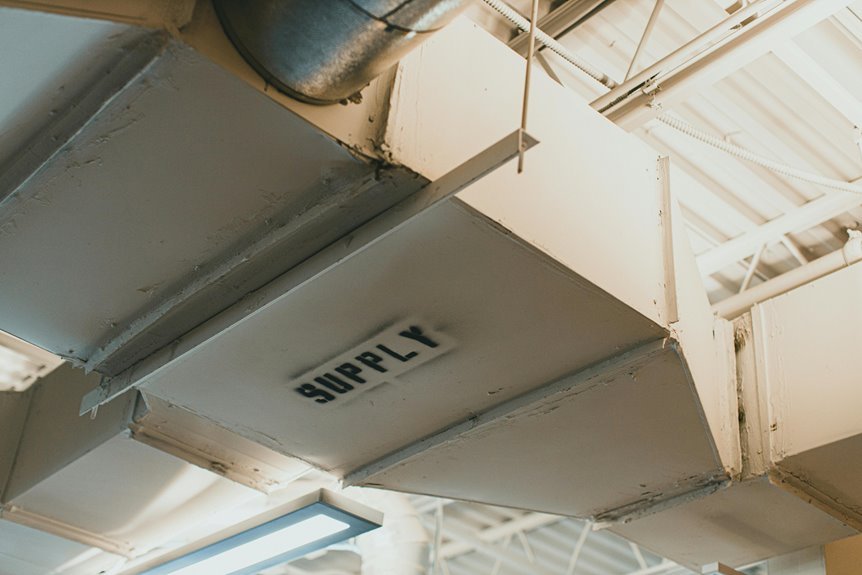
Before you cut into any ductwork, confirm that the in-duct air purifier matches your HVAC system’s duct type, airflow path, and mounting location. Check whether you’ve got sheet metal, flex duct, or duct board, then verify the unit’s mounting method fits safely. Follow airflow arrows exactly, and confirm the purifier meets your system requirements for voltage, cabinet size, and air volume. When you’re installing UV equipment, place it in the supply plenum after the air handler and maintain 24 inches from flex duct.
Next, confirm placement near the HVAC unit for efficient treatment and service access. For residential setups, the return air duct is often the correct location. Review maintenance specs too, including filter lifespan, so your whole home system stays protected, efficient, and aligned with best practice.
Decide if DIY Installation Makes Sense
Once you’ve confirmed compatibility and placement, decide whether you can handle the install safely with the tools, access, and electrical knowledge required. Start by auditing your setup: breaker access, duct clearance, ladder stability, and outlet proximity. If cutting sheet metal, sealing joints, and wiring a transformer feel routine, DIY may fit your homeowner confidence and lower project cost.
| Checkpoint | What you may feel |
|---|---|
| Power shutoff verified | Calm, in control |
| Tight attic or crawlspace access | Hesitant, isolated |
| Accurate drilling and sealing skills | Capable, included |
| Uncertain electrical work | Stressed, ready for backup |
If any step introduces doubt, pause. Your HVAC community values safe installs over risky shortcuts. Call a licensed technician when access is cramped, metal is hard to cut, or voltage work exceeds your comfort.
Choose the Right Purifier for Your System
First, verify that the purifier matches your HVAC system’s voltage, duct size, airflow direction, and available mounting clearance, because a mismatch can restrict airflow or create an unsafe installation.
Next, compare purifier technologies—media, electronic, and UV—based on your system layout, required installation location, and power requirements.
Before you choose, confirm the unit integrates safely with your air handler or plenum and won’t interfere with service access or duct connections.
Match HVAC Compatibility
Although many in-duct air purifiers fit standard forced-air systems, you should match the unit to your HVAC layout, duct material, and mounting location before you cut any opening. Firstly, confirm the manufacturer’s system requirements, including voltage, airflow range, and service clearance. Next, verify duct sizing so the cabinet fits without restricting CFM or stressing the blower.
Then inspect the installation zone. Return ducts usually suit residential units, while supply plenums near the air handler might suit specific designs. Check whether you have sheet metal, fiberglass duct board, or flex transitions, because each needs different fastening support.
Keep required clearance from bends, coils, and flex duct. Follow airflow arrows and place the purifier close enough to the HVAC unit for efficient treatment. That way, your setup works safely and feels professionally integrated.
Compare Purifier Technologies
Before you cut into the duct, compare purifier technologies so you choose a unit that matches your HVAC layout, power source, and maintenance capacity.
Start with your system type and airflow path. Then evaluate performance, service intervals, and safe installation clearances. You’ll make a smarter choice and stay aligned with best practice.
- Media filters use mechanical capture; check MERV limits and blower static pressure.
- Electronic purifiers need 120V power, routine cell washing, and correct airflow orientation.
- UV systems depend on exact UV wavelength, lamp shielding, and supply-plenum placement.
- Carbon stages rely on filter chemistry to target odors, VOCs, and smoke compounds.
- Hybrid units combine methods, but you must verify cabinet space, access panels, and maintenance reach.
Choose the technology your system can support safely, and you’ll install with confidence.
Gather the Tools and Safety Gear
Once you’ve confirmed the installation location, gather every tool and safety item so you can work without stopping mid-cut. Start with safety glasses, work gloves, and a dust-aware mindset; you’re part of the crew that plans before cutting metal. Set out a basic toolkit: drill/driver, measuring tape, hole saw, sheet metal shears, razor knife, screws, and mounting brackets.
Next, stage sealing and prep materials within arm’s reach. Include self-adhesive gasket material, foil-faced duct tape, alcohol wipes, and any flexible duct adapter your unit requires. Check blade sharpness, battery charge, and fastener compatibility with the purifier cabinet and duct surface.
Finally, clear the floor, stabilize your ladder, and keep packaging, templates, and manufacturer hardware organized so your install stays controlled, clean, and accurate throughout.
Turn Off Power to the HVAC
Shut down the HVAC system at its power source, not just at the thermostat. You need full electrical isolation before touching the cabinet or ductwork. Start with breaker safety: identify the correct furnace or air-handler circuit, switch it off, and confirm the disconnect is open should your setup have one. Then follow a basic lockout procedure so no one restores power while you’re working.
- Locate the dedicated HVAC breaker in the service panel.
- Switch the breaker fully to OFF, not halfway.
- Turn off the nearby service switch or disconnect, should installed.
- Tag the panel or use a lockout procedure device.
- Verify zero power at the unit with a non-contact tester.
These steps keep you in sync with safe installation practice and protect everyone nearby today.
Pick the Best Spot in the Duct
Next, choose a mounting location close to the air handler, because that placement maximizes purification efficiency and simplifies duct connection.
You should also verify that the spot provides safe service access, so you can remove panels, inspect components, and perform maintenance without contacting moving or energized equipment.
Before you mark the duct, confirm clearance, match the unit’s airflow-direction arrows, and keep the installation area unobstructed.
Near Air Handler
Because placement directly affects performance and service access, install the in-duct air purifier as close to the air handler as the design allows. This air handler placement supports maximum efficiency, shortens contaminated-air travel, and helps your system treat air before redistribution. You’ll also reduce pressure losses by keeping the run compact and aligned with system airflow.
- Choose the return duct for most residential purification units.
- Use the supply plenum after the air handler for UV models.
- Maintain airflow-arrow orientation during layout and mounting.
- Keep at least 24 inches from flex duct when using UV lights.
- Verify a flat, structurally sound section before cutting.
Before you mark the opening, shut off power at the breaker.
Then measure carefully, confirm clearances, and position the unit near the HVAC cabinet without obstructing airflow.
Accessible Service Location
While performance matters, service access should guide your final duct location. You’ll want a spot you can reach without straining over gas piping, wiring, or framing. Start by shutting off HVAC power, then confirm you have clear working space for panel removal, testing, and filter replacement. A location near the air handler usually keeps wiring short and maintenance practical.
Next, verify the cabinet door, access cover, or UV lamp section can open fully. Leave enough hand clearance for screws, tools, and electronic cells.
Should you’re installing in return ductwork, avoid cramped runs behind finished walls or low joists. For UV systems, maintain the required 24-inch clearance from flex duct.
Upon your setup supports safe service access, your whole HVAC team, including future-you, stays efficient and protected always.
Mark the Opening Carefully
A precise layout prevents fitment issues and air leaks, so start by holding the mounting plate against the return duct or plenum in the planned location near the HVAC unit. Confirm it’s level, aligned with airflow orientation, and clear of seams, screws, and internal obstructions before template tracing.
Your crew-level accuracy here keeps the install clean and serviceable.
- Wear gloves and safety glasses before handling sheet metal.
- Measure twice from fixed duct references for repeatable alignment.
- Keep the outline square to duct edges and access panels.
- Mark pilot hole placement at corners for later verification.
- Use a fine-tip marker so cut lines stay visible.
After marking, recheck clearance around the cabinet and adjacent components. You’re building a professional result your HVAC community recognizes: precise, sealed, and ready for the next installation step.
Cut the Duct Opening Safely
Once you’ve verified the layout, shut off power to the furnace at the breaker or service switch, put on safety glasses and work gloves, and drill a pilot hole inside the traced outline to confirm clearance behind the panel. Check template alignment one last time, then enlarge the opening with sheet metal shears, keeping the blades just outside the marked lines for dimensional accuracy.
Work methodically from corner to corner, supporting the duct skin to prevent buckling and sharp-edge chatter. Whenever you’re cutting insulated duct board, switch to a razor knife and score in controlled passes instead of forcing a deep cut. Maintain careful pilot hole placement so your starting point stays clear of coils, wiring, or structural seams. Remove burrs immediately, fold back any jagged tabs, and vacuum metal filings so everyone’s installation area stays safe.
Mount the Purifier Securely
Initially, choose a stable mounting point near the HVAC unit, align the cabinet with the airflow arrows, and confirm required clearance before you set the unit in place.
Next, position the mounting template, drill the pilot holes, and fasten the brackets or screws to solid duct material so the purifier can’t shift or vibrate.
Finally, verify the unit sits level, the hardware is tight, and the seal remains intact for safe, leak-free operation.
Choose A Stable Location
Before you cut or fasten anything, choose a rigid, accessible section of duct near the HVAC unit so the purifier mounts securely and operates efficiently. You’ll get better structural stability, easier service access, and safer alignment upon you select a flat metal surface that won’t flex under load or vibration.
- Verify the location sits close to the return duct or approved supply plenum.
- Check airflow arrows and confirm the unit can align with system direction.
- Maintain required clearance, including 24 inches from nearby flex duct for UV models.
- Inspect for vibration isolation opportunities to reduce noise transfer and component stress.
- Confirm you can reach filters, wiring, and panels without overreaching or removing major duct sections.
Fasten Mounting Hardware
With the location confirmed, fasten the mounting hardware so the purifier sits rigidly and seals tightly against the duct. Verify power is still off, then position the mounting template and confirm bracket alignment with the airflow arrows and opening edges. Drill pilot holes at the marked points to prevent sheet metal distortion.
Next, seat the mounting brackets and drive the supplied hardware fasteners evenly, alternating sides so you don’t rack the frame. If you’re working with fiberglass duct board, bend the retention tabs firmly for positive grip. On curved ducts, install a custom saddle before tightening screws.
Keep the gasket compressed, not crushed, to maintain an airtight seal. Finish by checking that the cabinet is level, immobile, and flush, with no sharp edges or gaps that could compromise safe operation.
Connect Power and Control Wires
At the power stage, keep the furnace circuit off and route the purifier’s power leads and any control wires to the HVAC unit without crossing sharp sheet metal edges. Follow the wiring diagram exactly so your install stays code-minded, reliable, and team-ready.
- Verify voltage and transformer requirements before landing conductors.
- Use grommets or bushings where wires pass through metal.
- Separate low-voltage control conductors from line-voltage leads.
- Tighten terminal screws firmly; don’t crush copper strands.
- Label each conductor for faster service and safer diagnostics.
Prioritize wiring safety by securing cables with approved clamps and maintaining drip-free routing. Complete the control switch setup only after confirming polarity, grounding, and blower interlock points. Whether the unit plugs into 120V, connect the switch and receptacle path cleanly, then recheck continuity and strain relief before restoring power.
Seal the Duct and Check Airflow
Once you’ve secured the purifier and completed the wiring, seal every duct joint, screw penetration, and perimeter gap with foil-faced duct tape so air can’t bypass the unit or escape into the mechanical space. Press tape firmly, then inspect gasket compression for seal integrity.
| Step | Action |
|---|---|
| 1 | Tape seams, corners, and fasteners. |
| 2 | Confirm arrows match airflow direction. |
| 3 | Check nearby flex duct for kinks. |
| 4 | Verify unobstructed return or supply path. |
Next, follow the air path visually from the HVAC cabinet through the purifier. You want straight, supported ductwork, no crushed sections, and no loose insulation intruding into the airstream. Keep gloves on around sheet metal edges. As part of the crew, you’re building a clean, controlled path for efficient filtration performance.
Test the Unit and Troubleshoot Issues
After you’ve sealed the duct and verified airflow direction, restore power at the breaker and run the HVAC system through a call for fan or heat/cool so the in-duct air purifier energizes under normal operating conditions.
Then complete a disciplined performance check and fault diagnosis:
- Confirm the power indicator illuminates and remains steady.
- Listen for arcing, buzzing, or transformer vibration.
- Inspect joints for whistle leaks or air bypass.
- Verify purifier orientation matches airflow arrows.
- Check outlet voltage and low-voltage connections.
As the unit won’t start, de-energize the circuit before opening access panels.
Reseat the prefilter, electronic cells, and plug. Tighten loose spade terminals and transformer screws. As airflow drops, look for misaligned cells or crushed flex adapter sections.
Through troubleshooting methodically, you’ll install with confidence and keep your system operating safely today.
Maintain the Purifier for Best Results
Regularly inspect the in-duct air purifier to keep airflow stable, maintain filtration performance, and prevent avoidable service issues. Shut off HVAC power first, then verify the cabinet, access panel, and duct seals remain secure. Check indicator lights, listen for vibration, and confirm airflow still follows the unit arrows.
Follow the manufacturer’s cleaning schedule so your system stays dependable for everyone in your home. Remove the prefilter and electronic cells carefully, wash only approved components, and let them dry fully before reinstalling. Complete filter replacement at the specified interval, especially during heavy-use seasons.
Wipe UV lamp surfaces with alcohol wipes whenever allowed, and never touch energized parts. Document maintenance dates, observe abnormal dust loading, and address leaks fast. That routine keeps your shared air system efficient, safe, and trusted year-round.
Frequently Asked Questions
How Much Does Professional In-Duct Air Purifier Installation Usually Cost?
Professional in duct air purifier installation typically costs between $500 and $1,500, with the final price based on the purifier model, any ductwork changes, and local labor rates. Before hiring, check the warranty terms, ask how the electrical connection and duct sealing will be handled, and work with an HVAC contractor known for reliable service in your area.
Will an In-Duct Air Purifier Increase My Monthly Energy Bill?
Yes, an in duct air purifier can raise your monthly energy bill a little. Check the unit’s wattage first, then keep filters clean and replace them on schedule. Good maintenance helps your HVAC system run efficiently, reduces strain, and supports cleaner indoor air.
Can an In-Duct Air Purifier Help Reduce Household Odors?
Yes, an in duct air purifier can help reduce household odors when used with odor source control first and kitchen smell removal next. It can improve air throughout the home, but safe airflow and proper filtration should be checked.
How Often Do Replacement Filters or Cells Need to Be Changed?
Replace filters every 3 to 6 months. Clean cells once a month and replace them every 1 to 2 years. Check the manufacturer’s lifespan and service instructions, turn off power before maintenance, inspect components, and keep a maintenance record.
Are In-Duct Air Purifiers Safe for Homes With Pets and Children?
Yes, in duct air purifiers can be used in homes with pets and children when you confirm low ozone output, ensure a sealed installation, and keep up with maintenance. Focus on pet safety, limit child exposure, follow the manufacturer’s specifications, and check system performance on a regular basis.