

Yes, an air purifier can improve indoor air quality and help your home feel fresher. It removes dust, pollen, smoke, pet dander, and other tiny particles floating in the air. That can mean easier breathing and better comfort in bedrooms and other busy rooms. The biggest difference comes from using the right filter, matching it to your room size, and placing it well.
Do Air Purifiers Improve Indoor Air Quality?
Yes, air purifiers can improve your indoor air quality, especially whenever the air in your home feels dusty, smoky, or heavy.
Whenever you want your space to feel cleaner and more welcoming, air purifiers support better air quality through strong air filtration. Many models with HEPA filters capture at least 99.97% of particulate matter (PM) at 0.3 microns, including dust, PM2.5, PM10, and allergens.
That matters because poor indoor air quality often comes from both outdoor pollution and indoor sources like cooking or smoking.
In real homes, portable units have cut Indoor air quality (IAQ) particle levels by about 50% on average, and sometimes by 69% to 80%. They don’t remove carbon dioxide, so you’ll get the best results whenever you pair filtration with ventilation and source control too.
Why Indoor Air Quality Affects Health
Cleaner air matters because your body feels every breath you take at home, and most people spend about 80 to 90% of their time indoors. That means your family shares long air pollution exposure from indoor air pollutants released through cooking, cleaning, smoke, materials, and outdoor air drifting inside.
Because these particles stay close to you, the health effects can show up fast. You might notice irritated eyes, a scratchy throat, headaches, sleepiness, or trouble focusing.
More significant, fine particulate matter can travel deep into your lungs, and the smallest bits may even reach your bloodstream. Over time, that can harm respiratory health, strain your heart, and affect your brain.
PM2.5 is also linked to inflammation, oxidative stress, anxiety, depression, and cognition changes, so cleaner air helps everyone feel safer together.
Which Pollutants Air Purifiers Remove
You can expect an air purifier to trap many of the particles that bother your lungs, including dust, pollen, pet dander, and smoke.
Should your unit uses a HEPA filter, it can catch very fine particles too, while activated carbon can help reduce some odors and gases.
Still, you should know its limits, because it won’t remove carbon dioxide or gases like radon, so fresh air and good ventilation still matter.
Particles And Allergens
Most air purifiers work best against one main group of pollutants: airborne particles. In your indoor air, Particles like dust and fine debris float where you breathe. A high efficiency particulate air filter helps an air purifier trap at least 99.97% of tiny particles at 0.3 microns and larger, so your shared space can feel cleaner and more comfortable.
- Dust and fine particulate matter
- Pollen and pet dander
- Fungi and cockroach particles
- Rodent debris in the air
- Better bedroom particle reduction
That matters provided you want your home to support everyone. Studies show air cleaners can cut indoor particle levels by about 50%, and sometimes 69% to 80%. Still, larger allergens often settle on surfaces, so your air purifier helps most upon movement sends them back into the air.
Smoke Odors And Gases
While a HEPA air purifier can make smoky air feel easier to breathe through capturing tiny smoke particles, it won’t remove the gases and odors that often cause the sharp smell and lingering irritation. That matters whenever tobacco smoke leaves behind volatile organic compounds and other harmful air pollutants.
To truly support your Air Cleaning goals, you need more than standard air filters. HEPA media can trap fine particle pollution, but gases like carbon monoxide, nitrogen dioxide, and ozone pass through.
Whenever you want to improve indoor air quality and cut smoke odors, look for units with activated carbon or alumina. These special materials can adsorb some gases that ordinary filters miss. Some systems, including water-bath models, have also lowered VOC levels by over 50%, helping your home feel fresher, safer, and more welcoming every day.
How Air Purifiers Reduce PM2.5 and PM10
As fine dust drifts into your home, an air purifier pulls that air through dense filter layers and traps the particles before they keep floating around your room. That matters because particulate from indoor and outdoor air can settle deep in your lungs. PM10 reaches the thorax, and PM2.5 can reach the alveoli, raising health risks from air pollution.
- HEPA filters capture 99.97% of particles at 0.3 microns
- Portable cleaners often cut bedroom particle levels about 50%
- Some trials showed PM drops from 69% to 80%
- One purifier reduced PM10 90% and PM2.5 80%
- MERV-13, HEPA, and Corsi-Rosenthal boxes support clean indoor air
Can Air Purifiers Reduce Airborne Germs?
You can reduce some airborne germs with a HEPA air purifier because it captures very small particles, including many droplet nuclei that might carry infections. Since these tiny particles can hang in the air for hours, good filtration helps lower what you breathe in and can make your indoor air feel safer.
Still, you should know the limits: air purifiers don’t remove carbon dioxide or most gases unless they use special media, so you’ll get the best results if you use them as part of a broader clean-air plan.
HEPA And Germ Capture
Because many germs travel through the air on tiny droplets and dust-like particles, a HEPA air purifier can help lower what you breathe in. HEPA air purifiers trap at least 99.97% of airborne particles at 0.3 microns, helping with Improving indoor air quality and lowering indoor pollutants.
- You get cleaner shared air
- You cut exposure to air pollution
- You reduce germ-carrying aerosols
- You support easier breathing
- You protect your group space
That matters because many cough and sneeze particles are about 1 to 5 microns and can linger for hours indoors.
In real homes, portable HEPA units have cut particle levels by about 50%, sometimes 69% to 80%.
You could also see a better health impact, especially provided asthma, allergens, and irritants already affect your circle. Still, use them with ventilation.
Droplet Nuclei Reduction
While a HEPA purifier can’t stop germs at the source, it can lower how many stay floating in your room by drawing in droplet nuclei, the tiny 1 to 5 micron particles that can hang in the air for hours after a cough, sneeze, or even normal talking.
That matters because these fine particles can carry germs linked to airborne transmission, including flu and measles. In shared indoor environments, a portable HEPA unit helps you create more clean air while trapping many germ carrying aerosols. HEPA filters capture at least 99.97% of particles at 0.3 microns, so they target much of this air pollution effectively. Studies also found big drops in particle levels, from about 50% in bedrooms to 69% to 80% in other rooms, helping everyone around you breathe with more ease and comfort daily.
Filtration Limits And Use
That cleaner air can make a real difference, but it helps to know what an air purifier can and can’t do with airborne germs. You can improve air quality by trapping germ-carrying particles in indoor air, yet filtration doesn’t remove CO2 or replace fresh airflow. That means the Use of air cleaners works best beside ventilation, not instead of it.
- HEPA captures 99.97% of particles at 0.3 μm and larger.
- Virus aerosols often fall within that catchable range.
- MERV-13 beats MERV-8 for reducing air pollution exposure.
- Portable cleaners cut pollution particles by 50% to 80% in studies.
- About five air changes hourly can better protect your shared space.
Whenever you choose a strong filter, you help your group breathe easier and feel safer together, especially during seasons in which indoor gathering matters most.
What Air Purifiers Cannot Remove
Even a strong air purifier has clear limits, and grasping them helps you make better choices for your home. Should you want your family to share good air quality, it helps to know that most units clean particles, not every part of the air we breathe. That matters for the impact of indoor air and the effects of indoor air pollution.
For example, standard filters don’t remove gases like VOCs, ozone, radon, or extra carbon dioxide.
HEPA filters work well on airborne particles, but not on gaseous pollutants in residential spaces unless special media is added.
Also, pollen, dust allergens, mold bits, and pet dander often rest on floors and furniture. Until those particles get stirred up, your purifier can’t catch them. So, surface cleaning still plays a big role in indoor air pollution.
Who Benefits Most From Air Purifiers
Because cleaner air matters most to people whose bodies react fastest to pollution, air purifiers tend to help those with asthma, COPD, and allergies the most. You can also benefit greatly when your family includes children, older adults, or anyone with heart problems.
- When you have respiratory diseases, you face increased risk from indoor particles.
- When you have pets, dander control can support comfort and health.
- When you use gas stoves or wood heat, filters can cut smoke exposure.
- Children can gain better focus, since air pollution on brain function matters.
- Cleaner bedrooms can improve Quality of Life where people spend most time.
You belong in this conversation too when smoke, mold, dust mites, or outdoor pollution reach your home. Lower PM2.5 supports your blood vessels, heart, and brain.
Which Filters Work Best
As you start comparing filters, the best choice usually comes down to one simple rule: catch the smallest harmful particles without choking airflow. For many homes, HEPA filters lead the pack because they capture 99.97% of small particles at 0.3 microns and above, which strongly supports indoor air quality.
If you’re filtering through air conditioning or HVAC systems, MERV-13 filtration gives your family a solid shared standard. It traps about 85% of 1 to 3 micron particles, far better than MERV-8.
In rooms that need extra help, portable air cleaners with layered filters can cut dust and allergens fast, with studies showing average particle drops near 50% and sometimes much higher.
You can also join many budget-smart households using Corsi-Rosenthal boxes, which push strong clean airflow with four MERV-13 filters.
How to Choose the Right Air Purifier
Two details make the biggest difference when you select an air purifier: a true HEPA filter and enough cleaning power for your room. You’re looking for quality that supports a healthy indoor space and helps your household breathe easier together.
- Choose true HEPA for particles including PM2.5 and allergens
- Check CADR so cleaning happens faster and more reliably
- Balance airflow, noise, efficiency, and filter cost
- For Wildfire Smoke or outdoor PM, try using a portable HEPA unit
- Consider a Corsi-Rosenthal box with MERV-13 filters for smoke
That balance matters next. Whenever a filter is too restrictive, performance drops. Whenever a purifier is too loud, you won’t keep it running. Also, standard units remove particles, not CO2 or gases, unless they include activated carbon. Ventilation still protects indoor air quality for everyone.
How Room Size Affects Performance
When you match an air purifier to your room, the room’s volume matters just as much as the purifier itself.
Should your space be larger, you’ll need more coverage and enough airflow to create the air changes that actually clean the air.
That’s why a unit that works well in a small bedroom might struggle in a big residence room unless you add more filtration.
Room Volume Matters
One simple rule can save you a lot of frustration: match the purifier’s airflow to your room’s size. When you do, you protect your shared ambient air, lower exposure to poor air, and support your health and well-being. Bigger rooms need more power, because more space holds more particles around people and surfaces.
- Large rooms need higher CADR
- Small units fade in big spaces
- Medium rooms fit midrange purifiers
- Strong DIY boxes suit open areas
- Better sizing supports environmental health
That’s why a four-filter Corsi-Rosenthal box, at about 900 cfm, fits large rooms far better than a 253 cfm Coway. An AirFanta 3Pro at 413 cfm can serve medium rooms well, but not oversized ones. In real homes, bedroom results often don’t carry into bigger inhabited rooms at all.
Coverage And Air Changes
Because coverage is really about air changes, the key question isn’t just how strong your purifier seems, but how much clean air it can move through your actual room each hour. That’s why measurements using CADR matter. They show whether your purifier is effective in reducing several pollutants during the time indoors you spend with family, friends, or coworkers.
As room size grows, you need more clean air per hour to avoid high levels of PM2.5. A four-filter Corsi-Rosenthal box can move about 900 cubic feet per minute, while a Coway Airmega AP-1512-HH delivers 253 on speed three. So, a small bedroom might do well with one unit, but a larger lounge, classroom, or office could need multiple purifiers, stronger units, or added ventilation. That way, your space feels safer and more comfortable.
Where to Place an Air Purifier
Although air purifiers look simple, where you place one can make a big difference in how much clean air you actually breathe. Put your air purifier in the room you use most, like a bedroom or home lounge, to support indoor health in your household indoor space. Keep it near your breathing zone, but not against walls or furniture, so it can catch airborne dust before it reaches your respiratory system and causes short-term effects.
- Choose your most-used room initially
- Keep airflow open on all sides
- Place it near where you sit or sleep
- Center portable units in occupied spaces
- Use multiple units in larger rooms
For wildfire smoke or infection concerns, place the unit where air moves well. Should you use HVAC filtration, install it in the return-air path for best whole-home support.
How to Get Better Results
Now that you’ve placed your air purifier in the right spot, the next step is making sure it can actually clean enough air to help you feel the difference. Choose a unit with a high CADR and a true HEPA filter, which captures 99.97% of tiny particles. Then match it to your room so airflow stays strong.
For better Effects, keep doors and windows closed whenever you can, because outdoor air pollution brings in PM2.5. The Environmental Protection Agency links particle exposure to human health and Public Health concerns, including long-term effects.
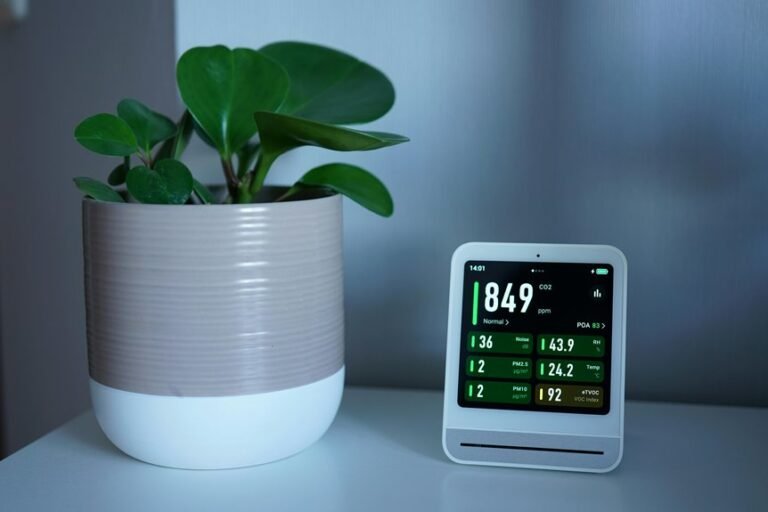
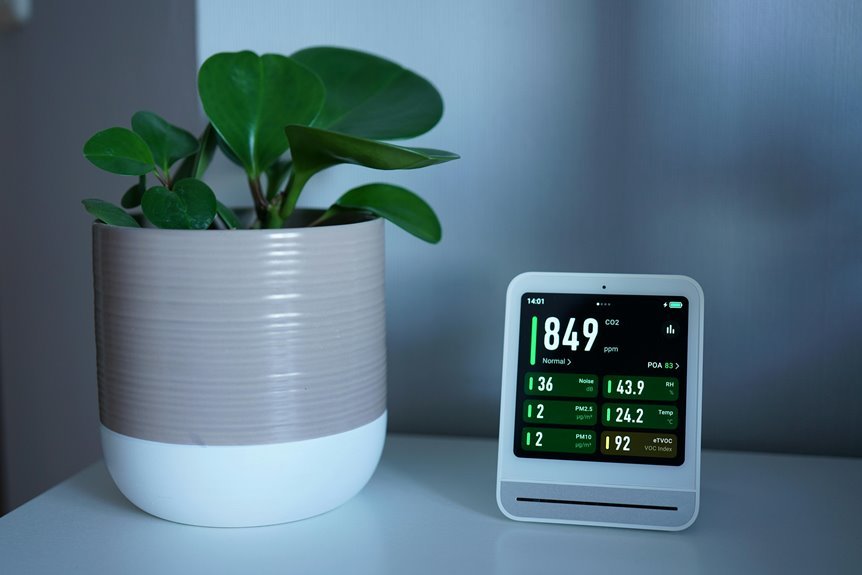
You’ll also get cleaner air whenever you cut indoor sources like gas stove fumes, smoke, candles, incense, mosquito coils, and cooking haze. Finally, use a PM2.5 monitor and aim for below AQI 50, so your space feels safer and more welcoming every day.
When an Air Purifier Is Worth Buying
Once you’ve improved placement and airflow, the next question is simple: is an air purifier actually worth the cost for your home?
- You deal with smoke, pet dander, or PM2.5
- Your allergies or asthma flare up indoors
- Outdoor environmental pollution enters your rooms
- You need portable help without big home changes
- You want fewer airborne pollutants around loved ones
You’ll get the most value once fine particles drive the impacts of air pollution in your space. HEPA units remove 99.97% of tiny particles and can cut bedroom levels by 50% to 80%.
That matters once wildfire smoke, gas stoves, incense, or tobacco smoke raise exposure tied to lung cancer, risk of cardiovascular problems, and increased hospital visits.
Once you have asthma or pet allergies, you can breathe easier.
Once stale air or CO2 is the issue, skip it.
Frequently Asked Questions
How Often Should Air Purifier Filters Be Replaced?
Replace air purifier filters every 6 to 12 months based on the manufacturer’s schedule. Filter life varies by usage, air quality, and filter type, so check for clogging indicators or reduced airflow to decide when replacement is needed.
Do Air Purifiers Increase Electricity Bills Significantly?
Air purifiers usually do not increase electricity bills much. Most units use relatively little power, so watt consumption, operating cost, and monthly energy expenses stay low, especially with an efficient model.
Are Air Purifiers Safe to Run All Night?
Yes, air purifiers are generally safe to run all night. They keep air moving while you sleep, reduce stale bedroom air, require little attention overnight, offer a practical option for homes with children, and can make the room feel cleaner and more comfortable by morning.
How Noisy Are Air Purifiers During Daily Use?
During daily use, most air purifiers produce a steady sound that ranges from barely noticeable on low settings to more audible on higher speeds. Many models include quiet modes, adjustable fan settings, and placement options that help reduce noise while keeping the air clean.
Do Smart Air Purifiers Offer Meaningful Benefits?
Yes, smart air purifiers can provide clear benefits. App controls, precise sensors, automatic adjustments, live air quality readings, and usage insights can help you maintain a cleaner and more comfortable shared indoor space.