

A mini air purifier cleans the air around you without taking up much space. It pulls in air from all sides, runs it through layered filters, and sends cleaner air back out with low noise. That makes it a smart pick for a bedside table, desk, car, or travel bag. Size, filter setup, battery life, and sound level all play a big part in how well it suits your space.
How Mini Air Purifier Design Works
Whenever you turn on a mini air purifier, it pulls room air in through a 360-degree intake or other compact vents, then moves that air through a layered filter system that traps what you don’t want to breathe. Inside, the design stays purposeful. A prefilter catches larger debris, activated carbon targets odors and gases, and HEPA media captures tiny particles with trusted precision.
Just as significant, the housing guides air with streamlined airflow channels, so each pass feels efficient instead of forced. That smart path helps the unit stay small, quiet, and easy to live with in your shared spaces.
Meanwhile, compact sensor integration lets you track PM2.5, PM10, or VOC changes in real time. You get a purifier that feels tuned to your room and to your daily rhythm, which helps your space feel more welcoming.
How Mini Air Purifiers Clean Small Spaces
You get the best results when the filter and fan work together, because the fan pulls dirty air in and the filter traps fine dust, smoke, and odors.
But even a strong mini purifier has limits, so you need to match its airflow and coverage rating to the size of your room. That way, you won’t expect a tiny unit to clean a big space like it’s got superhero lungs.
Filter And Fan Synergy
At the heart of a mini air purifier, the fan and filter work as a team to clean small spaces fast and evenly. You get the best results as the filter airflow balance matches smart fan pressure design. That pairing pulls dirty air in, moves it across the prefilter, carbon layer, and HEPA media, then sends cleaner air back around you.
Because the fan keeps air moving, the filter can trap particles instead of letting them drift past your shared breathing space. A stronger fan isn’t always better. Whenever airflow races, contact time drops. If it drags, cleaning feels weak. Whenever both parts are tuned together, you breathe easier, odors fade, and the purifier feels like it belongs in your daily routine, quietly supporting the comfort your space deserves every single day.
Room Coverage Limits
Most mini air purifiers work best in a clearly defined zone, not across a whole home, so room coverage matters more than the small size might suggest.
Whenever you want cleaner air that feels personal and reliable, match the unit to your space, not just your style. A model rated for 53 ft² at 4.8 ACH won’t serve a large bedroom well, and that creates a coverage mismatch.
- Keep it near where you sit or sleep for stronger airflow.
- Respect placement limitations like walls, corners, and furniture.
- Check CADR and square-foot ratings together, not separately.
- Expect better results in offices, dorm corners, nurseries, and desks.
That way, you create a small clean-air circle that truly supports your routine, helps you breathe easier, and makes your shared space feel more comfortable every day.
Which Filter Types Work Best?
You’ll get the best particle removal from a True HEPA filter, especially H13, because it can capture 99.97% of tiny 0.3-micron particles that often bother your lungs.
You’ll also want activated carbon, since it helps cut odors, smoke, and gases that HEPA alone can’t catch.
As you compare washable and disposable filters, you should consider about upkeep, long-term cost, and how much clean-air performance you want to keep.
HEPA Filter Performance
Because filter type shapes almost everything a mini air purifier can do, it’s smart to start with HEPA grades before you compare size, noise, or extra features.
Whenever you want cleaner air that helps everyone feel at ease, HEPA efficiency matters most. It tells you how well your purifier handles particle capture in real life.
- H13 True HEPA removes 99.97% of 0.3-micron particles, so you get top-tier filtration.
- H12 HEPA still offers strong mechanical filtering and works well for everyday shared spaces.
- H10 HEPA can help, but it captures less, so performance drops faster in busy rooms.
- Medical-grade HEPA gives you the strongest confidence whenever allergens and fine dust are your biggest concern.
That’s why your best fit usually starts with H13 or medical-grade HEPA initially.
Activated Carbon Benefits
Particle filters catch dust and pollen, but activated carbon handles the stuff that can make a room feel stale, sharp, or just plain unpleasant. When you want your space to feel welcoming, this layer matters. It supports odor control and gas removal by trapping smoke, cooking smells, VOCs, and pet odors that can make shared rooms feel less comfortable.
| Benefit | What you notice |
|---|---|
| Smoke capture | Air feels cleaner |
| VOC reduction | Less harsh smell |
| Pet odor help | Room feels fresher |
| Cooking smell control | Space feels inviting |
| Gas removal support | Breathing feels easier |
Paired with HEPA, activated carbon gives you a more complete clean. You get particle capture plus smell reduction, so your room feels easier to share, relax in, and proudly call your own every day.
Washable Vs Disposable
As you compare washable and disposable filters, the best choice usually comes down to one simple goal: steady, reliable cleaning in a small space. Should you want dependable performance, disposable HEPA options usually serve your group better, because they keep their tight particle-capturing structure instead of wearing down after rinsing.
- Washable filters lower short-term maintenance cost, but they often miss finer particles over time.
- Disposable filters support stronger filter longevity in real-world use, especially with True HEPA or H13 layers.
- Washable prefilters work well for pet hair and dust, so you can pair them with a disposable main filter.
- Best balance comes from a 3-in-1 setup: washable prefilter, activated carbon, and disposable HEPA.
That mix helps you breathe easier, save effort, and feel confident your shared space stays fresh daily.
Where Mini Air Purifiers Work Best
In small, lived-in spaces, mini air purifiers tend to work best because they can clean the air around you fast and with less wasted airflow.
You’ll notice the biggest difference where you spend steady time, like a bedroom corner, reading nook, or shared home office. Smart desk placement matters because keeping the unit close helps you breathe cleaner air right where your group gathers, studies, or works.
That same close-range strength also makes bathroom use practical, especially because humidity, odors, and limited floor space all compete.
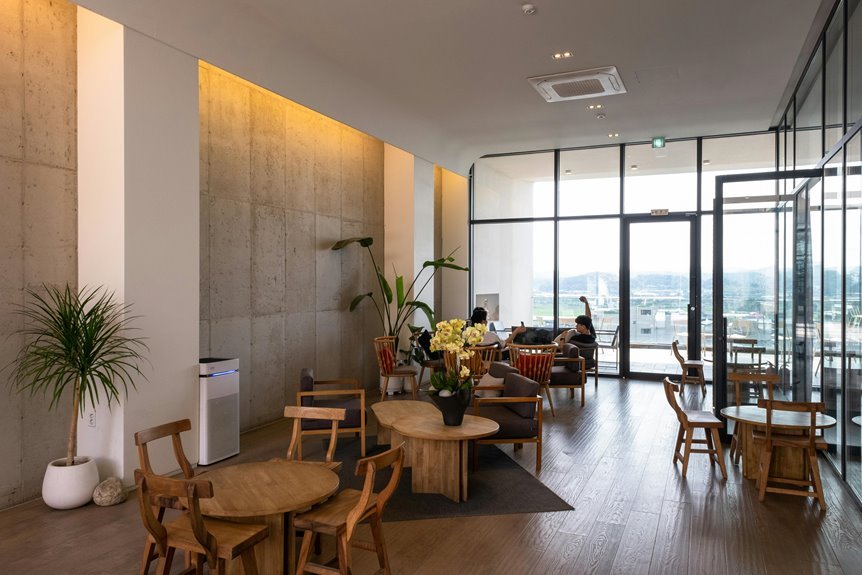
In studio apartments, dorm rooms, nurseries, and small entryways, a compact purifier fits in without making the room feel crowded. You get a quieter, more personal clean-air zone that feels made for your daily routine.
When your space is small but meaningful, a mini purifier helps it feel fresher, calmer, and more welcoming.
How Mini Air Purifiers Perform in Cars and Travel
That close-range strength matters just as much on the road, where stale cabin air, traffic fumes, and tight seating can make a short drive feel draining fast. In a car, a mini purifier works best as you place it near your breathing zone, not tucked away. Good car travel placement helps the filter catch dust, smoke, and odors before they linger around everyone.
- Set it in a cup holder or center area for steady airflow.
- Use activated carbon to cut fuel smells and food odors.
- Choose compact shapes that fit shared spaces without crowding knees.
- Pack one for portable suitcase use, so hotel rooms and rentals feel familiar.
That flexibility helps you keep your own clean-air routine wherever the trip takes your group, making travel feel calmer, easier, and more like home.
How Battery Life and Noise Affect Use
A mini air purifier only helps whenever you’ll actually keep it running, so battery life and noise shape your daily experience more than most specs do. Whenever battery runtime is short, you’ll stop using it whenever you need it most, like during commutes, desk work, or shared downtime with friends. Longer battery runtime gives you freedom and makes the purifier feel like part of your routine, not another device begging for attention.
Noise matters just as much because comfort decides habits. Whenever a purifier hums softly, you can read, talk, relax, or sleep without feeling pushed out of your own space. Quiet sleep modes and dark indicators support nighttime portability, especially whenever you move between rooms. That gentle, low-stress presence helps you keep clean air close and feel more at home anywhere.
What to Check Before You Buy
What should you check first whenever a mini air purifier looks perfect on the box? Start with fit, because you deserve a purifier that truly belongs in your space and routine. Then compare these essentials:
- Filter type: Look for True HEPA or H13 HEPA plus activated carbon for particles, odors, and gases.
- Coverage and CADR: Match the unit to your room size, not just the marketing photo.
- Sensors and auto mode: Real-time PM2.5, PM10, or VOC tracking helps you breathe easier without constant adjusting.
- Daily convenience: Check energy consumption, noise levels, filter indicators, and smart home compatibility.
Next, notice portability and controls. A compact footprint, handles, child lock, timer settings, and sleep modes help your purifier feel easy, quiet, and welcome every single day.
Frequently Asked Questions
How Often Should Mini Air Purifier Filters Be Replaced?
Replace mini air purifier filters every 6 to 12 months. True HEPA filtration captures 99.97% of particles as small as 0.3 microns, so regular replacement helps maintain performance. Check your unit’s filter indicator to know when it is time for a new one and keep the air in your space cleaner.
Do Mini Air Purifiers Help Reduce Cooking Odors?
Mini air purifiers can help cut cooking odors, especially if they use activated carbon to trap smell particles. They work best in smaller kitchens or nearby areas, making the air feel fresher and more comfortable for both of you.
Can Mini Air Purifiers Be Used Safely Around Pets?
Yes, mini air purifiers can be used safely around pets when placed where curious paws and noses cannot reach them, filters are replaced on schedule, and ozone producing models are avoided. They can help reduce airborne fur, dander, and dust while keeping your home more comfortable for both you and your pets.
Are App Controls Worth Having on a Mini Air Purifier?
App controls are worth having if remote scheduling and phone based control fit how you use a mini air purifier. They let you change fan speeds, check air quality, and keep a steadier routine, particularly when child lock and filter alerts become useful.
Do Mini Air Purifiers Come With Child-Lock Features?
Some mini air purifiers include child lock features such as control panel locks or app based locking. These options help prevent setting changes and add an extra layer of safety in homes with children.