


Choosing a large-room air purifier gets easier once you match coverage, filter style, and noise level to your space. A busy home with pets, smoke, or cooking odors needs different traits than a den, dorm, or open-plan living area. The nine picks below focus on models that can handle around 2,000 square feet or more, with a few options that lean stronger for extra-large rooms or harder-working spaces. You’ll also see which ones suit sleep, auto control, washable filters, and heavier-duty cleanup.
Quick Look at the Shortlist

FreAire HAP607 Large Room Air Purifier
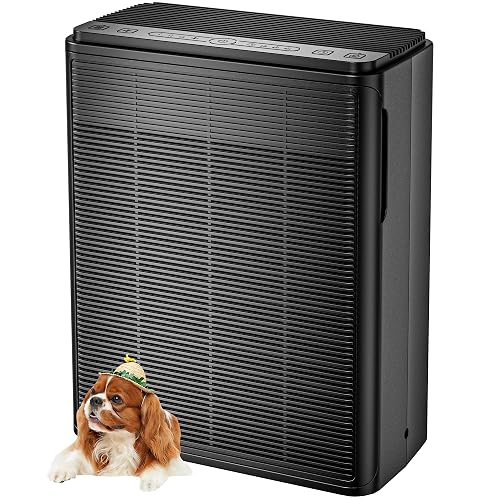
AIUZLK P260 H13 HEPA Air Purifier (Black)
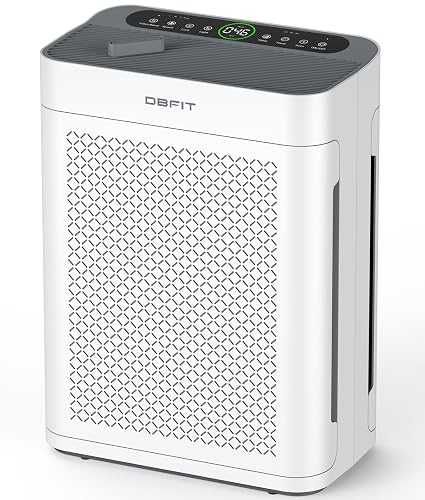
DBFIT AP300 Double-Sided Air Purifier
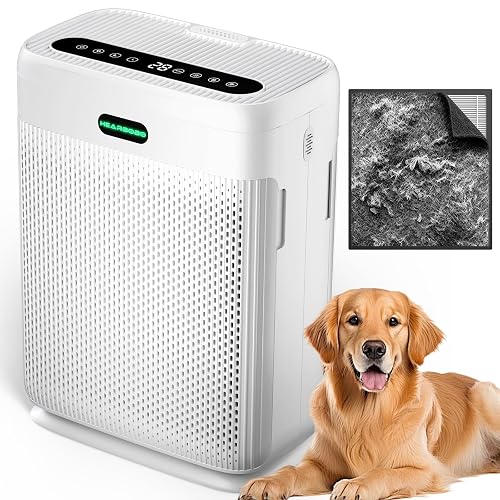
HEARBOBO Large Room Air Purifier
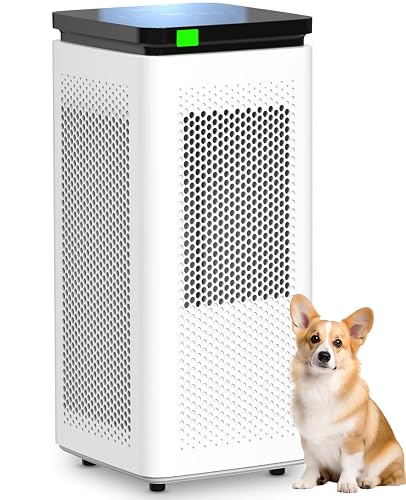
SIESEAN H13 True HEPA Air Purifier
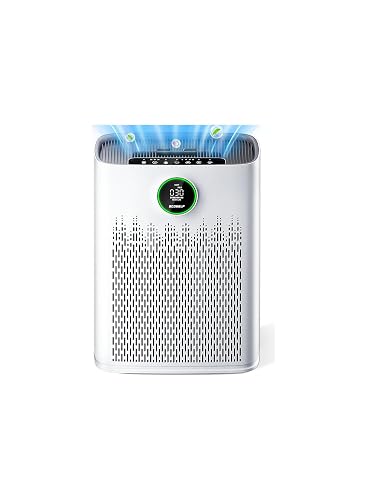
ECOSELF HAP603 True HEPA Air Purifier
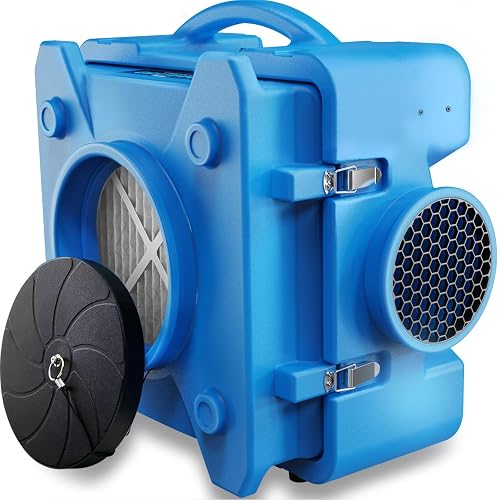
CADPXS Shield-550 Air Scrubber
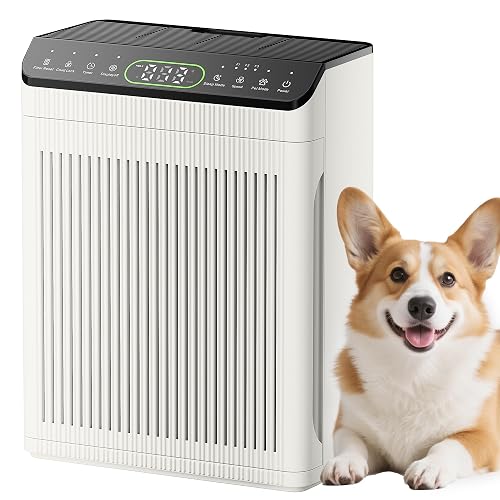
Evalit 2200Ft² PET Air Purifier (Ivory)
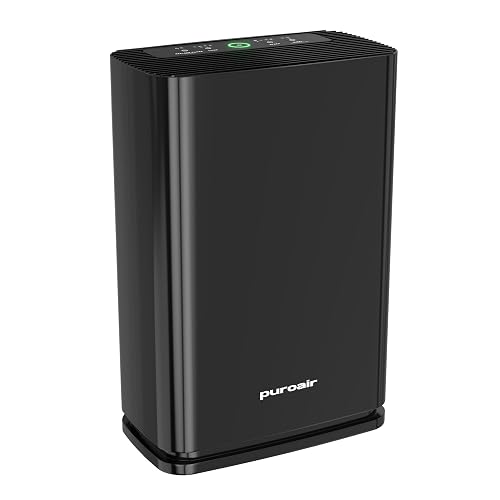
PuroAir 400 HEPA Air Purifier
More Details On Our Top Picks
FreAire leans into practical home use, with washable filters and a PM2.5 display that helps you read room conditions at a glance. The 22dB sleep mode is the detail that matters most in a bedroom or nursery-adjacent space, where a low hum can matter as much as airflow.
Compared with the more industrial CADPXS pick later in the list, this one stays firmly in household territory. The turbo mode should suit pet hair, cooking odors, and smoke in a larger living room, though the washable-filter setup means you’ll want a routine for cleaning it.
What We Like
- Washable filters lower day-to-day upkeep and suit households that prefer rinsing over swapping parts often.
- PM2.5 readout gives you a clear air-quality reference instead of leaving you to guess.
- 22dB sleep mode fits rooms where nighttime noise matters.
- Turbo mode adds a useful burst for pet hair and lingering kitchen smells.
Points To Note
- Washable filters still need regular drying and reinstallation, so upkeep takes a little discipline.
- The white finish looks clean, but it may show dust more readily in busy homes.
Feature Snapshot
Who It Suits Best
Households that want a straightforward large-room purifier with a quiet nighttime setting and simple upkeep will get the most from this one.
A Better Fit Elsewhere
DBFIT AP300 makes more sense for open-plan spaces where double-sided intake feels more useful than FreAire’s more household-focused layout.
AIUZLK keeps the formula simple, and that suits a lot of everyday rooms. The H13 HEPA filter matters because HEPA, or high-efficiency particulate air, is the broad category used for fine particles, which makes this a sensible fit for bedrooms, pet areas, and smaller living spaces.
Compared with FreAire, this model is a touch more straightforward on the coverage target and feels easier to place in a typical home layout. The black finish helps it blend into darker rooms, though washable filters still mean you’ll handle maintenance yourself instead of just swapping a cartridge.
Bright Spots
- H13 filtration gives you a familiar large-particle and fine-particle setup for daily use.
- Washable filters can reduce how often you need to think about replacements.
- Black housing blends more naturally into darker bedrooms or media rooms.
- Coverage up to 2000 ft² matches the category target closely.
Small Caveats
- Washable-filter care adds a little routine maintenance.
- The design stays basic, so you’re paying for function rather than extra features.
Core Details
Whose Shelf It Belongs On
Bedrooms, home offices, and smaller open rooms suit this purifier best, especially when you want a plain, useful machine without extra fluff.
Another Choice May Suit
PuroAir 400 makes more sense for shoppers who want more automation and a more polished control set in the same room-size range.
DBFIT’s double-sided intake is the feature that separates it from the first two picks, because it can draw air from both sides rather than working from a single face. That can matter in an office, dorm room, or open living area where airflow direction and placement flexibility both count.
The PM2.5 display gives you a quick read on fine particles, and the washable filter keeps maintenance in the hands of the household. In a room that stays active all day, that mix feels more responsive than a plain set-and-forget unit, though the larger coverage claim also means you’ll want to give it space to breathe.
Standout Traits
- Double-sided intake helps it pull air more broadly than a single-face design.
- PM2.5 display gives you a simple way to track room conditions.
- Washable filter suits households that prefer cleaning over frequent replacements.
- Coverage up to 3000 sq.ft. gives it room for larger shared spaces.
Room For Improvement
- The bigger footprint may feel less discreet in smaller bedrooms.
- Washable-filter upkeep still asks for regular attention.
Quick Facts
Built With In Mind
Open-plan homes, office spaces, and dorms benefit most from this design because the dual-sided airflow and sensor give you more control in active rooms.
Swap It Out When
FreAire HAP607 makes more sense for a quieter household bedroom where sleep mode and a softer household profile matter more than broader intake.
HEARBOBO follows the same large-room path as DBFIT, but it leans harder into sleep-friendly operation. The quiet sleep mode and washable H13 filter make sense in shared living spaces where you want the machine working in the background instead of announcing itself every time it ramps up.
The PM2.5 sensor helps you see whether the room is improving, which is useful after cooking or a dusty cleanup. The trade-off is that a more feature-heavy purifier often asks for more menu awareness, so it suits you best when you actually want those extra controls.
Highlights
- Quiet sleep mode suits bedrooms and late-night use.
- Washable H13 filter offers a practical upkeep pattern.
- PM2.5 sensor gives you a quick look at fine-particle changes.
- 3000 sq ft coverage broadens its fit beyond compact rooms.
Areas To Watch
- The extra settings can feel like more to learn at first.
- Washable-filter care still takes space and drying time.
Details At A Glance
Right Fit For
Shared bedrooms, family rooms, and quiet open layouts suit this model well, especially when you want a calmer nighttime profile.
Reach For A Different Pick When
SIESEAN’s H13 True HEPA purifier makes more sense for shoppers who want stronger stated capacity and a carbon filter in the mix.
SIESEAN sits at the heavier end of this roundup, with a 235 CADR rating and coverage up to 3500 ft². CADR, or clean air delivery rate, is the airflow-and-filtration measure that helps you compare how quickly a purifier can move cleaned air, so this model speaks to larger rooms with more demand.
The carbon filter is a useful addition for smoke, cooking smells, and pet odors, and the 30dB operation keeps the unit from sounding aggressive in calmer spaces. Compared with HEARBOBO, this one leans more toward raw coverage and filtration layering than sleep-first simplicity.
Upsides
- 235 CADR gives you a concrete performance reference.
- H13 True HEPA plus carbon filter covers fine particles and odor-heavy rooms.
- 30dB operation fits quieter home settings.
- Auto mode helps the purifier adjust without constant attention.
Worth Noting
- Its stronger feature set can make setup feel more involved.
- The larger capacity is useful, but it may be more purifier than a small bedroom needs.
Spec Overview
The Right Fit
Open living rooms, larger apartments, and households with smoke or odor concerns suit this purifier best.
Another Choice May Suit
AIUZLK P260 is easier to justify for a smaller bedroom or office where a simpler 2000 ft² setup makes more sense.
ECOSELF adds a little more personality to the category with smart mode, a PM2.5 display, and aromatherapy support. The 360° air outlet matters because it spreads output in more directions, which can feel better in rooms that don’t have a simple straight-through layout.
The 2X-purification claim points to a more aggressive circulation approach, and that helps it stand out from the simpler AIUZLK model. The honest read is that the aroma feature will suit some homes more than others, but the base air-cleaning setup is the real draw.
Reasons To Buy
- Smart mode helps the purifier feel less hands-on day to day.
- PM2.5 display makes the room’s fine-particle level easier to follow.
- 360° air outlet broadens airflow direction in a living space.
- Aromatherapy support adds a household-friendly extra for some setups.
Minor Gripes
- The aromatherapy feature won’t matter to everyone.
- More modes can mean a bit more menu learning at the start.
Feature Rundown
Best Suited To
Daily household use in mixed-purpose rooms, especially where you want automation and a little extra output flexibility, suits this purifier well.
Look Elsewhere When
HEARBOBO’s quieter sleep mode may suit you better for a bedroom that stays in use overnight.
CADPXS is not the same kind of machine as the household purifiers above it. The 550 CFM rating, meaning cubic feet per minute, points to airflow volume rather than bedroom quiet, so this pick fits restoration work, renovation dust, or other rougher jobs where movement matters most.
The three-stage filtration and stackable build push it further into job-site territory. Compared with SIESEAN or PuroAir, you’re trading home comfort features for a much more work-ready shape, and that’s exactly why it belongs on this list.
Best Bits
- 550 CFM gives it strong airflow for demanding cleanup jobs.
- Three-stage filtration helps it suit more layered work environments.
- Stackable design makes storage and transport easier for work crews.
- Built as a negative-air style machine, it suits restoration use better than soft home models.
Softer Spots
- It feels more industrial than home-friendly.
- Quiet living-room use is not its natural lane.
- Storage space matters more with a work-style machine like this.
Technical Sheet
Who Should Grab It
Contractors, restoration crews, and homeowners handling renovation dust or cleanup projects will get the most from this unit.
Where A Sibling Pick Shines
FreAire HAP607 is the better household match for bedrooms and family rooms where quiet comfort matters more than raw airflow.
Evalit focuses on pet-heavy rooms, and that shows in the washable pre-filter plus the HEPA filter combination. A pre-filter catches larger lint and hair before they reach the main filter, which makes a lot of sense in homes with shedding pets or dust-prone corners.
The PM2.5 monitor is useful after vacuuming, wildfire smoke drift, or a day when the room has seen more than usual traffic. Compared with AIUZLK, this one leans a bit more toward pet and debris management, though the same washable upkeep still asks for regular attention.
Standout Traits
- Washable pre-filter helps with pet hair and larger debris.
- HEPA filtration handles the finer cleanup side of the job.
- PM2.5 monitor gives you a simple air-quality reference.
- 2200 ft² coverage places it close to the target size class.
Areas To Watch
- Pre-filter care adds another part to clean.
- The ivory finish may show marks sooner in high-traffic rooms.
Core Details
Who Will Love This
Pet owners, especially in bedrooms or den spaces that collect fur quickly, will get the most from this purifier.
Skip It When
PuroAir 400 makes more sense for shoppers who want more polished auto modes and a more refined control experience.
PuroAir closes the shortlist with a more polished feature set than the simpler AIUZLK and FreAire models. The air-quality sensor, auto mode, and quiet sleep mode give you a cleaner hands-off experience, which is useful in homes that want the purifier to respond without constant adjustment.
The CarbonTech filter is the other standout, especially for rooms that deal with a mix of particles and everyday odors. The trade-off is that this kind of premium setup usually makes more sense when you’ll actually use the automation, because a basic bedroom with light use may not need all of it.
Strong Points
- Air-quality sensor supports more responsive operation.
- Auto mode reduces the need for constant manual changes.
- Quiet sleep mode suits overnight use in bedrooms.
- CarbonTech filter adds a stronger odor-focused layer.
Points To Note
- The more refined feature set may be more than a light-use room needs.
- Advanced automation makes sense only when you’ll let it run regularly.
Key Specs
Built For In Mind
Shoppers who want a more polished, low-touch purifier for a bedroom, den, or family room will appreciate this one most.
Consider Something Else When
AIUZLK P260 suits a simpler room better when you want washable filters and a more basic setup without the extra automation.
How To Choose The Right 2000 Square Foot Air Purifiers
Match Coverage To Real Room Size
Coverage numbers matter most when they line up with your actual layout. A single closed bedroom behaves differently from a long living room that opens into a hallway, and an open-plan apartment can ask more from the purifier than the square footage alone suggests.
You’ll get a better fit by thinking in terms of room shape, doors, and how often the space stays occupied. A model rated near 2,000 square feet works well for many homes, but larger open zones benefit from extra headroom such as 2400, 2600, or 3000 sq ft claims.
Choose The Filter Style That Matches Your Routine
Washable filters lower repeat upkeep, which helps in homes with pets or heavier dust, but they do ask for cleaning and drying time. True HEPA and H13 HEPA models lean more toward consistent fine-particle filtration, while carbon layers add another pass for odors from cooking, smoke, or pet rooms.
That trade-off is simple: cleaning convenience versus a more replacement-minded filter path. A busy household often leans washable, while a shopper who wants a more standard filter cycle may prefer a HEPA unit with a carbon layer.
Pay Attention To Noise, Sensors, And Auto Modes
Noise level matters more than it first appears, especially in a bedroom or office where a steady hum becomes tiring. Sleep modes around the low-20dB range suit night use well, while stronger airflow settings fit living rooms and larger shared spaces.
Air-quality sensors and PM2.5 displays help you understand what the purifier is doing, and auto mode takes away some of the guesswork. That combination is worth more to you when the room changes often, such as after cooking, vacuuming, or bringing pets indoors.
Look Past The Coverage Number
Some purifiers are built for comfort at home, and others are built for harder work such as renovation dust or restoration cleanup. CADR, airflow direction, and intake design can tell you more about day-to-day usefulness than a single room-size claim on its own.
The right choice depends on how the room lives. Quiet bedrooms call for softer operation and simple controls, while open layouts and work spaces benefit from stronger movement and more direct filtration paths.
Things Worth Knowing First
Wrong Turns To Avoid
A common mistake is chasing a large coverage number without checking noise or upkeep. A purifier can look strong on paper and still feel awkward in a bedroom if the fan profile is too noticeable or the filters are a hassle to maintain.
Another slip-up is ignoring room use. A pet room, nursery, and workshop all place different demands on the same category, so the smarter move is matching the feature mix to how the room actually gets used.
What The Higher Tier Buys
More expensive models usually add smarter sensing, better airflow design, extra filtration layers, or quieter operation. That upgrade often shows up as a machine that needs less babysitting and handles changing room conditions more smoothly.
You’ll feel the difference most in larger rooms, homes with smoke or odor concerns, or spaces where the purifier runs for long stretches. In a small guest room, that extra capability may not matter much, but in a shared living area it can be worth it.
Frequently Asked Questions
How large should a purifier be for a 2,000 square foot room?
A purifier rated around 2,000 square feet fits many large living spaces, but open layouts often benefit from more headroom. A model rated above your room size can feel less strained.
Do washable filters make sense for daily use?
They make sense when you prefer cleaning over frequent replacements. The trade-off is that you need a routine for rinsing and drying the filter.
Is HEPA enough for pet odor?
HEPA is strong for fine particles like dander and dust, but odor control usually improves when a carbon filter is part of the setup. That pairing is more useful for pet rooms and cooking-heavy spaces.
What does PM2.5 mean on an air purifier?
PM2.5 refers to very small airborne particles that can linger in a room. A PM2.5 display gives you a quick look at changing air quality without guessing.
Should you choose auto mode or manual settings?
Auto mode suits busy households because it adjusts to changing conditions without much effort. Manual control works well when you want more direct control over fan speed and noise.
Final Thoughts
For a typical large room, the best choice comes down to how much control you want, how quiet the machine needs to be, and how much upkeep feels reasonable in your home. FreAire and AIUZLK cover the basics well, while SIESEAN, DBFIT, and PuroAir bring more capability for rooms that stay busy. CADPXS stands apart for tougher work, not casual living. Match the purifier to the room’s real habits, and you’ll end up with a better fit than any spec sheet alone can promise.
