
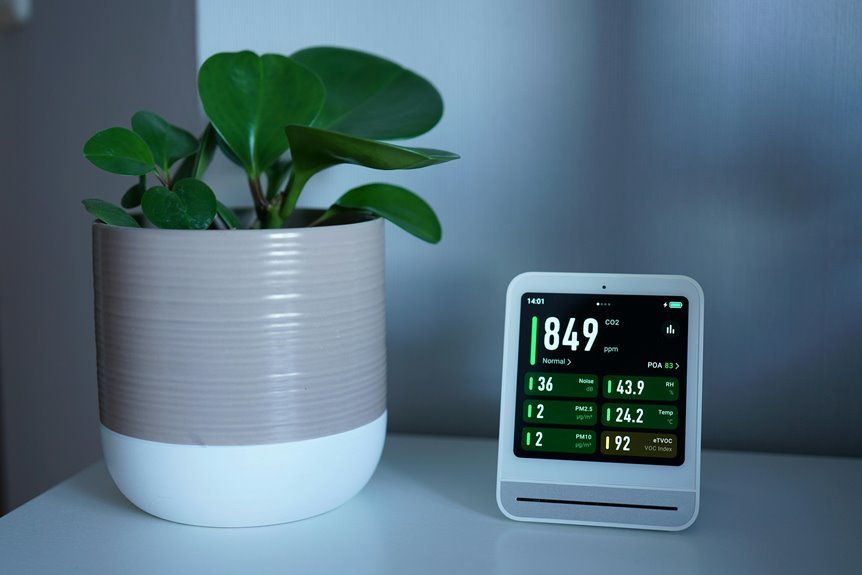

A quiet air purifier should fade into the background, not keep you awake. Most people find noise under 40 dB comfortable for bedrooms, while 40 to 45 dBA works well in shared rooms. Sleep mode often drops the sound to a soft, low hum. Fan speed, motor design, and HEPA airflow all shape how loud it actually sounds.
What Counts as a Quiet Air Purifier?
As you’re trying to figure out what counts as a quiet air purifier, the key is the noise level in decibels, or dB. In most homes, you’ll feel most comfortable with a unit that stays under 40 dB in sleep or low mode. That range helps your space feel calm, shared, and easy to inhabit.
As you compare models, look beyond marketing words like whisper quiet. Check real noise standards, because some brands only highlight their lowest setting.
For bedrooms, sleep specialists often prefer under 40 dB. For daily use in occupied spaces, 40 to 45 dBA usually feels comfortable without taking over the room. Should you want extra confidence, look for quiet certification, such as Quiet Mark. Features like sleep mode, smart sensors, and well-tuned motors also help you settle in.
Air Purifier Decibel Levels Explained
Although air purifier noise can seem confusing at the outset, decibel levels are simply a way to measure how loud the unit sounds as it cleans your air. Consider of the decibel scale as a shared language that helps you compare models and choose what feels right in your space.
For everyday noise measurement, lower numbers mean a softer sound. Around 20 to 30 dB feels like rustling leaves or a whisper, so it blends in easily at night.
A range of 40 to 45 dB usually feels comfortable in the rooms where your family gathers. Once you reach 60 dB or more, the sound stands out more, like conversation nearby. Upon you read product labels, you can feel more confident aware exactly where a purifier fits into your home and routine.
How Fan Speed Changes Noise
Because the fan does most of the work in an air purifier, its speed has the biggest effect on how loud the unit sounds in your room. When you raise it, you push more air, and you hear more movement. That means fan speed tradeoffs are part of everyday use, especially whenever you want clean air without breaking your calm.
- Low speed usually feels gentle and stays bedroom friendly, often under 40 dB.
- Medium speed gives you a comfortable middle ground for shared spaces and daily airflow balancing.
- High speed moves the most air, but it can sound closer to conversation or office noise.
How Motor Design Affects Sound
As you move from fan speed to motor design, you’ll notice that a brushless motor often sounds smoother because it cuts mechanical friction and extra vibration.
You also get a quieter airflow when the fan stays well balanced, since even small wobbles can add a hum or rattle you don’t want.
That means you can enjoy strong air cleaning without your purifier sounding like it needs a coffee break.
Brushless Motor Benefits
At an air purifier uses a brushless motor, you usually hear less of the harsh buzzing and mechanical hum that cheaper motor designs can create.
That matters if you want your room to feel calm, shared, and easy to live in. Because there are no rubbing brushes inside, you get better motor efficiency and reduced vibration, which helps the purifier sound smoother at every speed.
- You hear a softer, steadier airflow instead of choppy motor noise.
- You get fewer friction sounds, so the unit feels more refined and less distracting.
- You often get longer motor life, which means dependable comfort for your space.
That quieter performance helps you feel more at home, especially in bedrooms, nurseries, or study areas where everyone appreciates a gentler background sound each day and night.
Balanced Fan Rotation
A quiet motor helps, but balanced fan rotation is what keeps that quiet sound smooth instead of shaky. As the fan spins evenly, you hear airflow, not rattling or a faint wobble that can make a room feel less calm. That matters should you want your space to feel restful and welcoming.
Good rotor balance keeps each blade moving with the same force, so the motor doesn’t fight itself. In turn, vibration control cuts buzzing in the housing, shelves, and floor. You get a steadier sound that blends into daily life, whether you’re working, reading, or falling asleep.
This also helps the purifier stay quieter at medium and high speeds, where uneven spinning often becomes obvious. Should you value a peaceful shared space, balanced rotation helps everyone feel more at ease together.
Why Some HEPA Air Purifiers Sound Louder
Because HEPA air purifiers have to push air through a very dense filter, some models sound louder than you expect, especially at higher fan speeds. Whenever you hear that extra whoosh, you’re not imagining it. HEPA filter resistance makes the fan work harder, and that raises noise.
Here’s what usually causes the stronger sound:
- Dense filters slow moving air, so the motor pushes with more force.
- Fast airflow creates airflow turbulence around grilles, bends, and tight internal spaces.
- Higher CADR models often use bigger fans or stronger motors, which you’ll notice more in quiet rooms.
That doesn’t mean your purifier is doing anything wrong. In fact, you’re hearing the trade-off for stronger cleaning power. You’re part of a group that wants cleaner air and calm spaces, and both matter every single day.
What Sleep Mode Actually Does
How does sleep mode make an air purifier easier to live with at night? It lowers the fan to a gentler setting, so the sound usually drops into the soft 20 to 30 dB range. That matters because your bedroom feels calmer, and you don’t feel like you’re choosing between clean air and rest.
Just as vital, sleep mode cuts distractions that can make you feel out of step with everyone else trying to sleep. It often uses display dimming, so bright lights stop pulling your eyes open.
Many units also offer sleep timers, which let you match the purifier to your nightly routine without fuss. In other words, sleep mode helps your purifier fade into the background, where it belongs, while you settle in, breathe easier, and feel more at home each night.
Features That Make Air Purifiers Quieter
As you move beyond sleep mode, the motor and fan design start to matter just as much.
You’ll usually get a quieter purifier with a brushless motor because it cuts mechanical noise and runs more smoothly.
And whenever the fan uses noise-dampening blade shapes, you hear less harsh airflow, so your room stays calm instead of sounding like a tiny wind tunnel.
Brushless Motor Design
A brushless motor is one of the main reasons an air purifier sounds calm instead of harsh. When you choose one, you get smoother movement and less friction, so the unit feels more peaceful in your room. That matters when you want clean air without a distracting buzz.
- It uses brushless motor efficiency to spin with less wasted energy, which helps keep sound low.
- It relies on electronic commutation stability, so power flows evenly and the motor avoids the rough, choppy noise that older designs can make.
- It also reduces vibration, which helps your purifier feel like it belongs in quiet spaces where you rest, work, and recharge.
Because the motor runs cooler and steadier, you enjoy a cleaner, more comfortable space that feels welcoming day and night.
Noise-Dampening Fan Blades
Beyond the motor itself, fan blade design plays a big part in how quiet your air purifier feels in real life.
Whenever you choose a model with smart airflow blade geometry, you get smoother air movement and less harsh whooshing. That matters whenever you want your room to feel calm, shared, and easy to live in.
Just as brushless motors cut mechanical noise, noise-dampening blades soften the sound created by moving air.
Curved edges, balanced spacing, and lighter materials help the fan spin cleanly instead of chopping air. Manufacturers also use vibration reduction techniques to limit rattling inside the housing.
How Room Size Changes Air Purifier Noise
Why does room size make an air purifier seem louder or quieter? In a small room, sound stays close to you, so the fan can feel more present. In a larger shared space, the same unit might seem softer because room acoustics spread and absorb sound across more surfaces. Airflow distance matters too, since sound fades as you move farther away.
Here’s what you’ll notice in your home:
- Small rooms make fan noise feel stronger because you sit nearer to the purifier.
- Large rooms might push you to use higher fan speeds, which can raise noise.
- Soft furniture, rugs, and curtains help your space feel calmer by reducing echo.
Best Noise Levels for Bedrooms
For better sleep, you’ll want an air purifier that stays under 40 dB, with the sweet spot closer to 20 to 30 dB whenever the room is quiet.
That’s why low fan speeds and sleep modes matter so much, because they keep the air moving without filling your bedroom with a steady hum.
As you compare models, you should also look at how well night mode lowers both sound and light, so your room feels calm and easy to rest in.
Ideal Bedroom Decibel Range
A good bedroom air purifier should stay under 40 dB, because that range is quiet enough to fade into the background while you rest. That level supports a calm sleep environment and protects bedroom comfort, so you can feel settled, safe, and part of a home that truly cares for your rest.
Here’s a simple guide you can trust:
- 20 to 30 dB feels whisper quiet and usually blends in all night.
- 30 to 40 dB stays comfortable for most bedrooms and still sounds gentle.
- Above 40 dB can start to stand out whenever the room is otherwise still.
If you want the quietest experience, look for models rated below 35 dB. That sweet spot helps your room feel peaceful, welcoming, and easy to share with everyone at home each night.
Sleep-Friendly Fan Speeds
Whenever you’re choosing a sleep-friendly fan speed, the goal is simple: keep the purifier in the 20 to 30 dB range if possible, and try to stay under 40 dB through the night. That sweet spot usually feels like a soft whisper, so your room stays calm and your sleep space still feels like home.
From there, use the lowest speed that keeps air moving well enough for your room size. Low or sleep settings often land between 22 and 30 dB, while medium can jump to 40 to 50 dB and disturb lighter sleepers. Should your purifier have timer settings, use them to lower fan speed after bedtime.
Also watch for airflow limits, since very low speeds can reduce air changes. You want clean air, but you also deserve a bedroom that feels peacefully yours each night.
Night Mode Performance
Because bedrooms need both clean air and real quiet, night mode works best whenever it keeps noise below 40 dB, and ideally closer to 20 to 30 dB while you sleep. That range blends into your room, so you feel comfortable, settled, and part of a calm space.
To judge night mode efficiency, focus on how the purifier balances airflow, dimmed lights, and a gentle nighttime sound profile.
- Choose models rated around 22 to 30 dB on sleep mode for whisper-like comfort.
- Check whether smart sensors lower fan speed only whenever air stays clean, which protects quiet and performance.
- Compare low-speed noise with usable cleaning power, since some very quiet units move too little air.
Whenever night mode is tuned well, you won’t notice the machine, only the easier breathing around you each night.
Best Noise Levels for Offices
For office use, the best noise level usually falls between 45 and 58 dBA, since that range gives you solid air cleaning without turning the room into a distraction.
In that zone, you can keep your space feeling fresh while still supporting office acoustics and workplace comfort for everyone around you.
That balance matters because your team needs to focus, talk, and feel at ease together.
When your purifier stays near the lower end, around 45 to 50 dBA, it tends to blend into normal background sound.
When you need stronger cleaning in a busy shared area, moving closer to 58 dBA can still fit the rhythm of the room.
You don’t have to choose between clean air and fitting in.
The right setting helps you protect shared space without making your presence feel disruptive.
How Loud Is Too Loud?
Office-friendly sound can still feel too loud once it starts pulling your attention, interrupting sleep, or forcing you to raise your voice. That’s your cue that the purifier has crossed your noise tolerance thresholds, even though it still falls within common acceptable decibel limits for shared spaces.
To judge what feels right in your space, watch for signs like these:
- You keep noticing the fan instead of your work, show, or conversation.
- You need to speak louder because high settings sound like steady office chatter.
- You feel tense at night, especially once sound rises above the under-40 dB range many sleepers prefer.
In other words, “too loud” isn’t only about numbers. It’s about whether the sound still lets you feel calm, included, and comfortably present with others around you.
How to Choose a Quiet Air Purifier
How do you pick a quiet air purifier without ending up with one that only sounds quiet on paper? Start by checking decibel ratings at every speed, not just sleep mode. For bedrooms, stay under 40 dB, and look for models with smart sensors or sleep settings that keep noise low while you rest.
Next, match airflow to your space so you don’t need to run the fan on high all day. Compare CADR with noise, and pay attention to filter placement, since poorly placed filters can add turbulence and hum.
Also consider room acoustics. Hard walls and bare floors can make a purifier seem louder than it is. If you want a model your whole home can live with, choose one certified under 35 dB or verified around 40 to 45 dBA.
Frequently Asked Questions
How Often Should Air Purifier Filters Be Replaced?
Most air purifier filters need replacing every 6 to 12 months, while prefilters often need cleaning about once a month. If airflow feels weaker, odors linger, or you notice more dust settling around the room, the filter may be ready for attention.
Do Air Purifiers Increase Electricity Bills Significantly?
No, air purifiers typically add only a small amount to your electricity bill. Most models use relatively little power, especially on low or auto settings, so running one regularly is unlikely to make a noticeable difference in monthly energy costs.
Can Air Purifiers Help Reduce Pet Odors?
Air purifiers can help cut pet odors, particularly models with activated carbon to trap odor molecules and HEPA filtration to capture pet dander. The air smells cleaner, the room feels fresher, and everyday time at home becomes more comfortable.
Are Ozone-Producing Air Purifiers Safe to Use Indoors?
Do not use ozone producing air purifiers indoors. They can increase ozone exposure, irritate the lungs, and make asthma symptoms worse. For cleaner shared spaces and safer indoor air, choose HEPA filters and activated carbon instead.
How Long Should an Air Purifier Run Each Day?
Run your air purifier continuously for the best air cleaning results. If nonstop use is not practical, use it for at least 12 hours each day and place it in the room where your household spends the most time.